Wk1 DQ – Advanced Statistical Concepts and Business Analytics

Please answer each of the following questions in detail and provide examples for better clarity wherever applicable. Include in-text citations.

1. Define each of the following terms and provide an example for each: 

  1. An event, union of events, intersection of events, sample space, mutually exclusive events, the complement of an event, containment, the null event, disjoint events, the probability of an event, probability space, probability by counting, probability of union of events, probability of union of disjoint events, the relation between probabilities of complementary events, relation between the probabilities of the contained event and the probability of its container.
  2. Please explain conditional probability accompanied by an example based on a contingency table. Explain how the notion of conditional probability yields the relation for the probability of intersection of independent events.
  3. Please explain the Bayes’ theorem accompanied by an example.
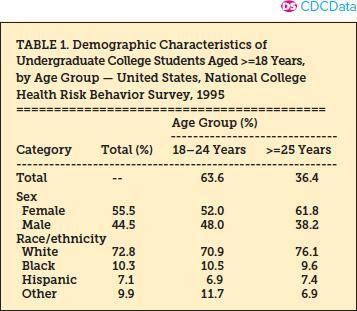
  4. Demographic characteristics of college students in the USA whose ages are at least 18, according to a survey taken in 1995 are shown in Table 1. Using conditional probabilities, discuss: 
  5. The dependence between age and gender
  6. The dependence between age and ethnicity for U.S. college students

Table 1

Demographic characters of college students in the USA whose ages are at least 18 in 1995.

Note:


Note:

1. Need to have at least 1 peer-reviewed article as the reference and textbook as the reference

2. Need in-text citation

3. Please find the attachments as the power points of the course for reference.

4. Textbook Information:

Bowerman, B., Drougas, A. M., Duckworth, A. G., Hummel, R. M. Moniger, K. B., & Schur, P. J.  (2019). Business statistics and analytics in practice (9th ed.). McGraw-Hill

ISBN 9781260187496

5. Please find the Course Learning Outcome list of this course in the attachment

Complementary therapies


1. Self-care techniques- please answer the following questions after reading the Tibetan chapter

a. How do you experience compassion fatigue? Explain your answer in detail. What self-care techniques have you used to combat compassion fatigue? 

b. What one new technique could you implement into your self-care?

c. How does self-care improve the overall well-being of the nurse?

d. How can nurses and patients be taught Tibetan medicines for self-care? How would you teach a patient about Tibetan medicines? Give an example.

2. Guided imagery and music therapy

a. Think of a scenario discuss where you would employ music therapy and interventions into the treatment of a patient at any age? What would be your desired outcomes for improved health of the patient? How would you consider age-appropriate therapeutic techniques for 13-year-old patient autistic patient? Compare your results to one of the National Guidelines in your learning materials.

b. Give an example of one patient with whom guided imagery would be useful and how you would employ methods of guided imagery? Come up with two.

Resources.

https://upliftconnect.com/the-tibetan-science-of-healing/

Batt-Rawden, K. B., & Storlien, M. (2019). Systematic use of music as an environmental intervention and quality of care in nursing homes: A qualitative case study in Norway. Medicines (Basel, Switzerland), 6(1), 12. https://doi.org/10.3390/medicines6010012. Retrieved from https://www.ncbi.nlm.nih.gov/pmc/articles/PMC6473613/

Instructions

3 pages APA format

List at at least 3 scholarly articles less than 5 years

Data-Based Changes

Write an word essay addressing each of the following points/questions. Be sure to completely answer all the questions for each number item. There should be three sections, one for each item number below, as well the introduction (heading is the title of the essay) and conclusion paragraphs. Separate each section in your paper with a clear heading that allows your professor to know which bullet you are addressing in that section of your paper. Support your ideas with at least three (3) scholarly citations using APA citations in your essay. Make sure to reference the citations using the APA writing style for the essay. The cover page and reference page do not count towards the minimum word amount. Review the rubric criteria for this assignment.

  1. Identify one aspect of big data and data mining that is interesting to you. Explain the concept and how it might bring value to healthcare. 
  2. Describe the concept of continuity planning. If you were the director or manager for your current workplace, describe the preparedness program you would recommend.
  3. Locate an article discussing the use of informatics in healthcare education of the general public or of nursing students. Discuss the benefits and drawbacks to using technology in this situation and recommendations from the author. Do you feel this use of technology is a viable method of educating (the public or nursing students)? Why or why not?

Assignment Expectations

Length: 1500 words total for this assignment.

Structure: Include a title page and reference page in APA style. 

References: Use the appropriate APA style in-text citations and references for all resources utilized to answer the questions. Include at least three (3) scholarly sources to support your claims.

business homework……due tomorrow……..easy easy easy

this assignment is due tomorrow…..must be done by 8pm California time……

please read and do the following: 

People in Hawaiian T-shirts. Delicious fresh fruits and vegetables. A place where parking is tight and aisles are tiny. A place where you will be unable to find half the things on your list but will go home satisfied. We are, of course, talking about Trader Joe’s (a privately held company), a unique grocery store headquartered in California and located in 22 states. By selling store-brand and gourmet foods at affordable prices, this chain created a special niche for itself. Yet the helpful employees who stock the shelves and answer questions are definitely key to what makes this store unique and helps it achieve twice the sales of traditional supermarkets.

Shopping here is fun, and chatting with employees is a routine part of this experience. Employees are upbeat and friendly to each other and to customers. If you look lost, there is the definite offer of help. But somehow the friendliness does not seem scripted. Instead, if they see you shopping for big trays of cheese, they might casually inquire if you are having a party and then point to other selections. If they see you chasing your toddler, they are quick to tie a balloon to his wrist. When you ask them if they have any cumin, they get down on their knees to check the back of the aisle, with the attitude of helping a guest that is visiting their home. How does a company make sure its employees look like they enjoy being there to help others?

One of the keys to this puzzle is pay. Trader Joe’s sells cheap organic food, but they are not “cheap” when it comes to paying their employees. Employees, including part-timers, are among the best paid in the retail industry. Full-time employees earn an average of $40,150 in their first year and also earn average annual bonuses of $950 with $6,300 in retirement contributions. Store managers’ average compensation is $132,000. With these generous benefits and above-market wages and salaries, the company has no difficulty attracting qualified candidates.

But money only partially explains what energizes Trader Joe’s employees. They work with people who are friendly and upbeat. The environment is collaborative, so that people fill in for each other and managers pick up the slack when the need arises, including tasks like sweeping the floors. Plus, the company promotes solely from within, making Trader Joe’s one of few places in the retail industry where employees can satisfy their career aspirations. Employees are evaluated every 3 months and receive feedback about their performance.

Employees are also given autonomy on the job. They can open a product to have the customers try it and can be honest about their feelings toward different products. They receive on- and off-the-job training and are intimately familiar with the products, which enables them to come up with ideas that are taken seriously by upper management. In short, employees love what they do, work with nice people who treat each other well, and are respected by the company. When employees are treated well, it is no wonder they treat their customers well daily.

Assignment: Trader Joe’s promotes entirely from within the organization. This means that if you are a good, dedicated worker, you can rise up within the company. The company also pays among the best in the retail industry. And, it creates a work environment that supports autonomy and contribution? Does it need to do invest in all three of these strategies: promotion, pay and work environment?

Write a one-page opinion paper. What is the relative importance of the three strategies in supporting Trader Joe’s success? (In other words, which is most important?) Could Trader Joe’s continue to be successful recruiting and retaining employees without investing in all three strategies? Is so, which should be eliminated or diminished?

Unit 2 Case Study Accounting

Instructions

Cookie Creations (Chapter 2)

This assignment is a continuation of the Cookie Creations case study, which began in Chapter 1. From the information gathered in the previous chapter, read the continuation of the Cookie Creations case study in Chapter 2 of the textbook on p. 2-42.

The case study allows you to apply what you have learned about accounting and the recording process. This assignment will enable you to practice what you have learned so far.

After researching the different forms of business organization, Natalie decides to operate Cookie Creations as a proprietorship. She then starts the process of getting the business running. In November 2019, the following activities listed below take place.

Nov. 8: Natalie cashes her U.S. Savings Bonds and receives $520, which she deposits in her personal bank account.

Nov. 8: She opens a bank account under the name “Cookie Creations” and transfers $500 from her personal account to the new account.

Nov. 11: Natalie pays $65 for advertising.

Nov. 13: She buys baking supplies, such as flour, sugar, butter, and chocolate chips, for $125 cash. (Hint: Use the Supplies account.)

Nov. 14: Natalie starts to gather some baking equipment to take with her when teaching the cookie classes. She has an excellent top-of-the-line food processor and mixer that originally cost her $750. Natalie decides to start using it only in her new business. She estimates that the equipment is currently worth $300. She invests the equipment in the business.

Nov. 16: Natalie realizes that her initial cash investment is not enough. Her grandmother lends her $2,000 cash, for which Natalie signs a note payable in the name of the business. Natalie deposits the money in the business bank account. (Hint: The note does not have to be repaid for 24 months. As a result, the note payable should be reported in the accounts as the last liability and on the balance sheet as the last liability.)

Nov. 17: She buys more baking equipment for $900 cash.

Nov. 20: She teaches her first class and collects $125 cash.

Nov. 25: Natalie books a second class for December 4 for $150. She receives $30 cash in advance as a down payment.

Nov. 30: Natalie pays $1,320 for a 1-year insurance policy that will expire on December 1, 2020.

Answer the questions below using an Excel spreadsheet. You should create a new tab on your spreadsheet for each calculation used for a total of three tabs on your spreadsheet.

  1. Prepare journal entries to record the November transactions.
  2. Post the journal entries to general ledger accounts.
  3. Prepare a trial balance at November 30.

Please show your work, and do not take any shortcuts. Make sure to complete item “a” completely before moving to item “b,” and then move to item “c.” You cannot jump ahead unless you have completed each step sequentially in full.

Propose a new healthcare model for the US. Write a memo, report including executive summary and a power point presentation of the model

Create a healthcare delivery model for the U.S. healthcare system. When creating the model, ask yourself these questions: What is included? How does it look? Who does it serve? How is it financed? Is it sustainable?

Include the following in your project:

  • A memo that explains the proposed model and what it hopes to achieve, including information on the changing dynamics of healthcare reimbursement and the associated funding sources.
  • In a report outlining the model, you should include:
  • An executive summary
  • The model itself (i.e., what’s included in the model, who the model serves, description of how the model will be financed and sustained)
  • Timeline of major events in healthcare that have transpired over the past 10 years that have impacted this new model
  • A list of the current financing and reimbursement models within the U.S. healthcare delivery system and a statement of how each will change or remain the same under this new model
  • A synopsis of the major challenges of economic and noneconomic barriers to improving quality, reducing costs, and increasing access to healthcare
  • A list and description of stakeholders within U.S. healthcare system under this new model
  • A SWOT analysis of the current U.S. healthcare system
  • A trends forecast outlining the possible changes in healthcare that may affect the model over the next 5 years
  • A voiceover PowerPoint presentation to the Senate committee to layout/describe the model in detail

week 4 project roles of advance nurse

Health Policy Project

Based on YOUR program of study, review the literature and address ONE the following:

FNP/AGNP: Medicare reimbursement for NPs is 85% for the same health care that MDs receive at 100% reimbursement? Please address questions below and state your position on this mandate.
– Or –
FNP/AGNP: What states have NP Full Practice Authority and which states have limitations or restrictions? How does this apply to your state? Please address these questions and state your position on the regulation within your state.

Nurse Executive: What is value based care and how will it impact decisions made at the executive level relative to nursing and AP nursing? Please address and state your position on the regulation.

Nurse Informaticists: What law(s) was/were enacted to regulate health information? Please address and state your position on this regulation.

Nurse Educator: What agency regulates nursing education? Explain in detail.

For the above assignment,  use the following guide:

  • Describe the current policy/status, which organization regulates and determine if it needs to change; if opposed to change, state why.
  • Provide the process required to make the change with key players and parties of interest; identify the groups who are opposed
  • Explain how AP roles (which ones) could lead the effort to make or influence the change in policy or keep the policy the same and the impact in healthcare quality.

Use apa style for references. My program of study is Family Nurse Practitioner. South Florida is where i will practice. 

Week3 Assignment this is ApA style essay

The human service professional serves the needs of patients and families in a healthcare setting by providing crisis counseling. Reflect on a news story that involved crisis. Briefly explain the crisis. Using Maslow’s Hierarchy of Needs, analyze your chosen crisis issue for the individual (and the family, if applicable) in one of these specific settings. Determine an appropriate intervention and defend your selection.

In your paper,

  • Describe a specific crisis involved a person or family.
  • Apply Maslow’s Hierarchy of Needs to the lives impacted by the crisis.
  • Analyze a crisis-related issue that the in individual is facing/will or may face.
  • Defend an appropriate crisis intervention strategy.

The Crisis Intervention in Healthcare Settings paper

  • Must be two to four double-spaced pages in length (not including title and references pages) and formatted according to APA Style as outlined in the Writing Center’s APA Style (Links to an external site.) resource.
  • Must include a separate title page with the following:
    • Title of paper (bold and with a space between the title and the rest of the information)
    • Student’s name, followed by institution name (“University of Arizona Global Campus”)
    • Course name and number
    • Instructor’s name
    • Date submitted

For further assistance with the formatting and the title page, refer to APA Formatting for Word 2013 (Links to an external site.).

“Crisis” and faulty assumptions about immigrants

BOOK: David A. Gerber, American Immigration: A Very Short Introduction (Oxford U Press, 2011)

CHAPTER 6 TO END ANSWER THE FOLLOWING QUESTIONS


Gerber begins by discussion a highly-influential book by political scientist Samuel P. Huntington that came out in 2004. What was Huntington’s concern, according to Gerber? What does his concern have to do with assimilation and anxieties about “perceived unwillingness of immigrants to become Americans?” Who is Gerber talking about? Who is anxious?

Huntington’s pessimism, according to Gerber, rests on a mistaken assumption about American history. What is that assumption? Why is it wrong? How does the history that we have studied in this class undermine Huntington’s assumption? Think of the immigrants in the 1840s and the Chinese workers who built the transcontinental railroad; as well as those who were working in the Triangle Shirtwaist Factory in 1911 when it burst into flames? There are many more examples as well. How do these three examples prove Huntington’s thesis wrong? What kinds of contributions have these immigrants made to the growth and wealth of the United States?

If Huntington’s prognosis from the political Right is faulty, what does Gerber say about immigration analysists on the Left? To what extent is their pessimism based on faulty assumptions?

Please write NO MORE THAN ONE PAGE 

Character Analysis


Three pages character analysis of the same main character you made the analysis plan sheet.

 The introductory paragraph should contain name of story and full name of the author, then a one-sentence summary of story, then the importance of character, then the thesis statement.

The body paragraphs should each begin with a topic sentence which names a subpoint in your thesis.  The paragraph that follows should contain evidence that supports the subpoint, including a concise direct quote from the short story. Direct quotes should comprise no more than 20%. use them to augment rather than replace your own ideas.

An analysis in this case means taking a deeper look at a character, speculating about his/her mind and motives, and figuring out what makes him/her tick. Pretend you are writing this for a person who doesn’t understand the character–it’s your job to explain better than the author could in the story what the character says about humanity. If you enjoy the subject of psychology, and it helps to think of your analysis in terms of the psychology of the character, it’s fine to use this approach.

Make sure you don’t just summarize the character (don’t re-tell what the character does in the story). Instead, use the most important details about the character’s appearance, words, and actions to look deeper at the character’s inner nature and what makes her (or him) an interesting person. Give the information you listed on the plan sheet.

Consider these questions when formulating:

1) How does the character’s age, gender, profession, looks, way of acting and speaking, dreams, plans for the future (or lack thereof), etc. make you “see” him or her? Do you respect this character as a person?

2) What is important to the character? In other words, what in the story shows up the character’s humanness–his/her strengths and/or weaknesses, his/her ability to deal with life? (Hint: Highlight a few key phrases or sentences that point to the character’s  inner being so you can use that direct evidence from the story to support your analysis).

3) Look at the central conflict in life the character faces in the story and how s/he deals with it. Can you broaden this out to describe the character’s *character* (inner being) in general? Does the character possess a flaw that makes life more difficult for him/her?

 The book pdf is here so you can go there and find the full story. It’s on chapter 23. Thank you.