Percentage of Completion


Assignment Content

  1. René Alverez knew she was in over her head soon after she took the job. Even so, the opportunity for promotion comes along rarely and she believed that she would grow into it. Ms. Alverez is the cost accounting specialist assigned to the finishing department of Standard Tool Company. Bill Sawyer, the manager of the finishing department, knows exactly what he is doing. In each of the three years he has managed the department, the cost per unit of product transferred out of his work in Process Inventory account has declined. His ability to control cost is highly valued, and it is widely believed that he will be the successor to the plant manager, who is being promoted to manufacturing vice president. One more good year would surely seal the deal for Mr. Sawyer. It was little wonder that Ms. Alverez was uncomfortable in challenging Mr. Sawyer’s estimate of the percentage of completion of the department’s ending inventory. He contended that the inventory was 60 percent complete, but she believed that it was only about 40 percent complete. After a brief altercation, Ms. Alverez agreed to sign off on Mr. Sawyer’s estimate. The truth was that although she believed she was right, she did not know how to support her position. Besides, Mr. Sawyer was about to be named plant manager, and she felt it unwise to challenge such an important person. The department had beginning inventory of 5,500 units of product and it started 94,500 units during the period. It transferred out 90,000 units during the period. Total transferred-in and production cost for the period was $902,400. This amount included the cost in beginning inventory plus additional costs incurred during the period. The target (standard) cost per unit is $9.45. Required a. Determine the equivalent cost per unit, assuming that the ending inventory is considered to be 40 percent complete. b. Determine the equivalent cost per unit, assuming that the ending inventory is considered to be 60 percent complete. c. Comment on Mr. Sawyer’s motives for establishing the percentage of completion at 60 percent rather than 40 percent. d. Assuming that Ms. Alverez is a certified management accountant, would informing the chief accountant of her dispute with Mr. Sawyer violate the confidentiality standards of ethical professional practice in Exhibit 1.17 of Chapter 1? e. Did Ms. Alverez violate any of the standards of ethical professional practice in Exhibit 1.17 of Chapter 1? If so, which ones? f. Discuss the components of the fraud triangle that affected Ms. Alverez’s behavior.

    Read the scenario and complete the activity below.

    Compute the equivalent cost per unit, assuming the ending inventory is considered to be 40 percent complete.

    Compute the equivalent cost per unit, assuming the ending inventory is considered to be 60 percent complete.

    Write a 350-word summary of your calculations and findings. Comment on Mr. Sawyer’s motives for establishing the percentage of completion at 60 percent rather than 40 percent.

    Submit calculations and summary.


BI101 Unit 1 Discussion Post 2


Discussion Topic

pH and the Scientific Method

pH

Your book defines pH as the “measure of the relative acidity of a solution, ranging in value from 0 (most acidic) to 14 (most basic). pH stands for potential hydrogen and refers to the concentration of hydrogen ions.” (G-12) Living organisms (e.g., plants, animals, bacteria) require careful control of their internal pH, since they are sensitive to even small changes in pH. Homeostasis is the maintenance, by living organisms, of stable surroundings; this includes pH, as well as temperature, osmolarity, and a number of other environmental variables.

1. Explain how organisms that require a neutral environment survive and function despite metabolic activities that tend to shift pH toward either acidic or basic ends of the pH scale? Be specific!

Scientific Method

You’ve read about the Scientific Method in our Unit 1 overview page and this unit’s lecture. The scientific method is used unconsciously by many people on a daily basis, for tasks such as cooking and budgeting. Understanding how to apply the scientific method to these seemingly non-scientific problems can be valuable in furthering one’s career and in making decisions. We talk about a hypothesis being used and tested, but a hypothesis is often confused with a prediction.

2. Explain what a hypothesis and a prediction are and how they are different.

3. Imagine that you notice that your neighbor’s lawn is lusher and greener than yours. You observe your neighbor for several units and it appears that he treats his lawn no different than you, except for the fact that he applies a fertilizer. Based on this observation, identify a testable hypothesis that explains your observation and provide at least one prediction based on your hypothesis.

Unit 2 Written Assignment: Applying the Ethical Decision-Making Model

Notes for Assignment 

You are seeing a client who is on probation for being convicted of a drug crime, which included mandated counseling, probation meetings, revoking his driver’s license and reassessment of risk to abuse illicit substances. You are the only provider in your small community that offers this service (substance abuse evaluations and monitoring). You have been seeing this client for one year and almost completed treatment, however recently has been missing appointments. You are concerned he is using again. The court is interested in your evaluation of the client to determine if he should be discharged from his probation. You do not feel comfortable allowing him to be discharged from probation due to past history of violent behaviors your client displays when he is using and your concerns he is using again.

While trying to decide how to proceed with the evaluation, your friend wants to introduce you to her new boyfriend and she invites you to a wine-tasting party. You arrive early and begin to enjoy a glass of wine. After a couple glasses of wine, your friend’s boyfriend arrives and he happens to be the client to which you are supposed to complete the evaluation. Before you could be introduced, you noticed he was served a glass of the wine. When the client sees you, he is concerned you will use the information about him drinking in your evaluation. He threatens to tell the court that you are out-to-get him (and is the reason for the bad evaluation) because you are a drunk yourself.

In your assignment add one historical date in this reading that captured your attention as it relates to the following case: Remley, Jr. T. P. & Herlihy, B. P. (2016). Ethical, Legal, and Professional Issues in Counseling (6th ed.). Pearson. ISBN-10: 0135183812 | ISBN-13: 978-0135183816

Use the steps of the model as an organization for this assignment. Be thorough. For the ethical standards section, do your best while referring to the ACA Code of Ethics as we have not covered the standards in detail yet. 

Please review before completing assignment. You may also refer and use these resources included for your reference. Please see following attachments

U5 discussion

Unit 5 Discussion: Uncollectible Accounts and Accounts Receivable Turnover

1919 unread replies.1919 replies.

This discussion is designed to reinforce learning objectives 1.2, 3.1, 3.2, and 3.3

When a company lets customers buy on credit, the company attracts more customers. Allowing sales on credit is a part of doing business. However, it is not without risk! The result may be attracting some customers who will never pay the amount they owe to the business. When this money is not paid, the business has an uncollectible account that must be written-off. If a business has too many uncollectible accounts, the business suffers and the end result can spell disaster!

There are two methods of writing off uncollectible accounts:

  • The allowance method (recognized by GAAP)
  • The direct write-off method (not recognized by GAAP)

There are several different allowance methods:

  • Percentage of sales method – also referred to as the Income statement method
  • Percentage of accounts receivables method – also referred to as the balance sheet method
  • Aging of receivables method

The difference between the percentage of sales method and the percentage of accounts receivables method is how the allowance for doubtful accounts is treated when using the two methods.

Account receivables are amounts due from customers for credit sales. For a company selling on credit, it is important to assess both the quality and liquidity of its accounts receivable. The quality of accounts receivable is how likely you are to collect these accounts without any loss. The speed of collection, or how fast these accounts are paid or converted to cash, relates to the liquidity of collection. The accounts receivable turnover measures both the quality and liquidity of accounts receivable. In other words, it measures how likely collections are going to be and the speed of those collections.

Requirements

Imagine you own a business that sells to customers on trade credit. For example, you manufacture luxury soaps and you sell these soaps to boutique stores in your hometown area.

Please respond to the following questions in your initial post:

  • How would you manage the collection of receivables?
  • Even with careful planning, sometimes receivables become uncollectible. Which method would you use to write off an uncollectible account? Explain your reasons.
  • What procedures would you put into place to encourage customers to pay their bills on time?

Be sure to cite any sources that you use with APA format. Wikipedia is not an acceptable source.

Network Security Plan

 Project: Network Design and Plan © 2014 by Jones & Bartlett Learning, LLC, an Ascend Learning Company. All rights reserved. www.jblearning.com Page 1 Purpose This project provides you an opportunity to solve a comprehensive problem in firewall and VPN  implementation at various levels. You will play the role of an employee participating in the network  security update planning process in a specific business situation. Required Source Information and Tools Web References: Links to Web references in this Instructor Guide and related materials are subject to  change without prior notice. These links were last verified on May 7, 2013. The following tools and resources will be needed to complete this project:  A Web browser and access to the Internet to perform research for the project  Access to the NetWitness Investigator application  Packet trace files, vulnerability scans, and associated reports (provided by your instructor) o general_comm.pcap o encrypted_comm.pcap o nmap_scan.xml o topology_fisheye_chart.pdf o nessus_report.html Learning Objectives and Outcomes  You will be able to apply core competencies learned throughout the course to a single project.  You will be able to analyze and apply knowledge of firewalls, VPNs, network diagrams, and  defense measures.  You will be able to demonstrate logical reasoning and decision-making skills. Deliverables The project is divided into two smaller assignments and one major assignment. Details for each  deliverable can be found in this document. Refer to the course Syllabus for submission dates.  Project Part 1: Network Survey  Project Part 2: Network Design  Final Project: Network Security PlanProject: Network Design and Plan © 2014 by Jones & Bartlett Learning, LLC, an Ascend Learning Company. All rights reserved. www.jblearning.com Page 2 Project Part 1: Network Survey Introduction Network defenses rely first on understanding the current configuration of hosts, services, and protocols in  use within the organization. Before it is possible to plan to change anything, you must first understand what is present and where it is located within the network. The initial phase of any network security  realignment process involves identifying existing resources. Scenario You have been working as a technology associate in the information systems department at Corporation  Techs. The Corporation Techs’ management is concerned that they are losing business to a competitor  whose bids are too accurately just under the bids offered by Corporation Techs––by an exact amount. A  security firm was contracted to conduct a review of Corporation Techs’ systems, identifying unauthorized  access to the Web server as a potential source of compromise due to the shared reporting and public  Web site functions. The packet trace and vulnerability scans gathered during this review are available for  your use. The Web server provides public access to the organization’s static Web site for contact information, while  sales team members in the field transfer contract and bid documents using a site secured with a logon  and password. Corporation Techs has budgeted for new networking hardware but does not want to add  additional servers due to cooling issues. Your manager has asked you to create a security plan that will  prevent unauthorized access, while making sure that both public and secured Web access remain  available. Tasks The data and information you need to complete this part of the project are provided to you. (See the  Required Source Information and Tools section at the beginning of this document.) In this part of the  project, you need to conduct a survey of the existing hosts, services, and protocols within Corporation  Techs’ network. Specifically, you need to:  1. Access the PCAP data using NetWitness Investigator. 2. Identify hosts within the Corporation Techs’ network.  3. Identify protocols in use within the Corporation Techs’ network. Project: Network Design and Plan © 2014 by Jones & Bartlett Learning, LLC, an Ascend Learning Company. All rights reserved. www.jblearning.com Page 3 4. Develop a list of hosts and services provided by each.  5. Create a professional report detailing the information above as the initial document for  development of the network security plan.  Write the network survey results as detailed in the instructions above. Evaluation Criteria and Rubrics Evaluation Parameters Percentage  Weight Did the student demonstrate an understanding of the competencies covered to date? 30 Did the student include all hosts identified within the provided packet trace? 30 Did the student include all services and protocols identified within the provided packet  trace and align them with the proper host? 30 Did the student create a professional, well-developed draft with proper grammar,  spelling, and punctuation? 10 Total 100%Project: Network Design and Plan © 2014 by Jones & Bartlett Learning, LLC, an Ascend Learning Company. All rights reserved. www.jblearning.com Page 4 Project Part 2: Network Design Introduction As discussed so far in this course, the configuration of a network affects the options available for security  and network defense. Using the network survey produced during the first part of this project, together with  host vulnerability assessments and access requirements, you need to design an updated network  structure. Scenario You have been working as a technology associate the information systems department at Corporation  Techs for a while now. You have discovered so far that all of Corporation Techs’ computer systems share  the same Class C public IP address range, including workstations along with servers providing  authentication, e-mail, and both secure and public Web sites. Your next task in this project is to construct a basic network design. An important requirement for the  network design is to reduce the number of public addresses needed as the subnet lease results in very  high ISP costs. Tasks Construct a basic network design, separating private and public services within the Corporation Techs’  network. To do so, you must: 1. Access the PCAP files using NetWitness Investigator, and browse the Nmap scan (XML format),  topology fisheye chart (PDF format), and Nessus report (HTML format). 2. Identify vulnerabilities and clear-text information transfer.  3. Conduct research and determine the best network design to ensure security of internal access  while retaining public Web site availability.  4. Identify any opportunities for reduced ISP costs through port redirection or address translation. 5. Design a network configuration, identifying network gateways, port or address redirection  systems, and the location of hosts within private and protected network segments. 6. Create a professional report detailing the information above as supportive documentation for the  network security plan. 7. Create a report that includes a basic network diagram and research results.Project: Network Design and Plan © 2014 by Jones & Bartlett Learning, LLC, an Ascend Learning Company. All rights reserved. www.jblearning.com Page 5 Evaluation Criteria and Rubrics Evaluation Parameters Percentage  Weight Did the student demonstrate an understanding of the competencies covered to date? 30 Did the student identify all vulnerabilities identified in the packet trace and host  vulnerability scans? 30 Did the student produce a network design that will fulfill the stated requirements,  separating private network resources and protected DMZ bastion hosts? 40 Total 100%Project: Network Design and Plan © 2014 by Jones & Bartlett Learning, LLC, an Ascend Learning Company. All rights reserved. www.jblearning.com Page 6 Final Project: Network Security Plan Scenario You have been working as a technology associate in the information systems department at Corporation  Techs for three months now. You have conducted a network survey and developed a basic network  design intended to provide security for private network resources and publically exposed Web services. Your manager specified that all information transferred between the sales team in the field and the  organizational servers must be protected against snooping. The manager also wants the secured  reporting site to be available only through the organization’s private network so that an outsourced  network-based intrusion detection system (NIDS) service can log all connections. Tasks You need to recommend a network design and identify hardening strategies intended to meet the  requirements. To do so, you must: 1. Access the PCAP and other scan data for this project. 2. Conduct research and determine the best network design to meet the stated requirements. 3. Research hardening strategies and identify recommended mitigation strategies for identified  vulnerabilities. 4. Identify mechanisms for secure network access by remote users, both in terms of secure Web  access as well as reporting access conducted using the private network. 5. Develop a network security plan including network realignment, hardening practices, and policies  for remote resource access. 6. Identify expectations from recommended changes and provide justification for each  recommendation in simple language so that primary stakeholders are able to understand it. 7. Create a professional report detailing the information above, presented as a recommendation for  a network security realignment project for Corporation Techs. Include persuasive justification and  measurable expectations as part of this recommendation. Write the network design results as detailed in the instructions above. Your plan should be made using a  standard word processor format compatible with Microsoft Word.Project: Network Design and Plan © 2014 by Jones & Bartlett Learning, LLC, an Ascend Learning Company. All rights reserved. www.jblearning.com Page 7 Evaluation Criteria and Rubrics Evaluation Parameters Percentage  Weight Did the student demonstrate an understanding of the competencies covered in this  course? 30 Did the student produce a network design that will fulfill the stated requirements,  including VPN and SSL access? 20 Did the student identify effective network hardening strategies for identified  vulnerabilities? 20 Did the student provide a persuasive justification and measurable expectations for the  recommended changes? 20 Did the student create a professional, well-developed report with proper grammar,  spelling, and punctuation? 10 Total 100 

“Internet Security: From Stand-alone Computers to Web-based Systems”


For this writing assignment you will create a paper entitled, “Internet Security: From Stand-alone Computers to Web-based Systems”. The contents of the paper will be based on subjects covered in the textbook. The goal of creating this paper is for you to learn more in-depth information about various subjects covered in the textbook.

From each of the chapters 1 through 8 in the textbook pick one major section that is of interest to you. For each section that you selected, do the following:

Use the chapter number and the title of the section in the textbook as the title for that part in your paper, for example, “(Chapter 1) Client/Server Computing”. Then in 200 – 250 words, either confirm the information given in the section or add to the information in the section (or both). Find this material by using the references listed in the back of the textbook and by searching on the WWW. Your confirmation or addition of information should be based on primary sources rather than information from other textbooks or from magazine (i.e., web-zine) reviews. Do not use Wikipedia or other such websites as a reference. Also, do not copy/paste sentences from the textbook into your paper.

Your completed paper should follow APA format. The paper should consist of eight parts (one for each chapter) and contain a total of 1600 to 2000 words. 

Create your paper in a Microsoft Word document, and submit the Word file on the course website.

APA Assignment


ASSIGNMENTS:

Part A: In the paragraph below there are 3 direct quotes and/or paraphrases, rewrite the paragraph in correct APA format.

The day has come for the patient to see the nurse practitioner prior to his trip abroad. By having a “pretravel assessment at least 6 weeks before departure, the provider may assess the timing, duration, and circumstances of travel. Michelle Zappas Candice Whitely and Sarah Carter p. 548 2019.” When the patient is traveling abroad it depends on what country or countries the patient is visiting as to what if any vaccinations are required. It is necessary for the nurse practitioner to remain current with regards to the latest recommendation from the CDC and WHO for travel advisories. (JNP, 2019, p. 548). Primary care NP’s are uniquely positioned to protect the health and well-being of the patient and local community Zappas, Whitely, & Carter.

Part B: Write the following references in correct APA format:

  1. Hosein Karimi and Negin Masoudi Alavi Nurse Midwifery Study June 2015 volume 4 issue 2 Doi: 10.17795/nmsjournal29475 Florence Nightingale: The Mother of Nursing
  2. Jean Watson: Theory of Human Caring. Angelo Gonzalo, BSN, RN updated September 12, 2019. Retrieved March 20, 2020 from https://nurseslabs.com/jean-watsons-philosophy-theory-transpersonal-caring
  3. Michael B. A. Oldstone. Viruses, Plagues, & History. Published 11/2/2009. Oxford University Press. revised and updated edition 2010. New York, New York. ISBN 978-0-19-532731-1
  4. American journal of respiratory and critical care medicine. January 1, 2020. Volume 201 number 1. Clinical fingerprinting: a way to address the complexity and heterogeneity of bronchiectasis in practice. Miguel Angel Martinez-Garcia, Timothy R. Aksamit, and Alvar Agusti. Pages 14-19.
  5. Taber’s Cyclopedic Medical Dictionary. Edition 17. F.A. Davis company. Philadelphia, PA. copyright 1993. Page 679.
  6. Nurses and the use of computer technology. RNAO. No date. Retrieved November 19, 2019 from https://rnao.ca/sites/rnao-ca/files/Nurses_and_the_use_of_computer_technology.pdf
  7. Arabi. F. Rafii. M. A. Cheraghi and Ghiyasvandian, S. (2014). Nurses’ policy influence: A concept analysis. Iranian journal of nursing and midwifery research, (issue 3) volume 19, pp 315–322.
  8. Burke, S. (2016). Influence through policy: Nurses have a unique role. Reflections on Nursing Leadership. Retrieved from https://www.reflectionsonnursingleadership.org/commentary/more-commentary/Vol42_2_nurses-have-a-unique-role.
  9. Davoodvand, S., Abbaszadeh, A., & Ahmadi, F. 2016 Journal of medical ethics and history of medicine Patient advocacy from the clinical nurses’ viewpoint: a qualitative study volume 5 number 9
  10. Volume 6 issue3. Pages 1124-1132. Nsiah, C., Siakwa, M., & Ninnoni, J. P. 2019. Registered Nurses’ description of patient advocacy in the clinical setting. Nursing Open

Nursing and Aging and Advance Family Practicum (Due 24 hours)


1) Minimum 8 full pages  (Follow the 3 x 3 rule: minimum three paragraphs per part)


Parts 6 and 7 are the same question, however, you must answer both questions with references and different writing always addressing them objectively, that is as if you were two different people. Similar responses in wording or references will not be accepted.

             Part 1: Minimum 1 page

             Part 2: minimum 2 pages

             Part 3: Minimum 1 page

             Part 4: minimum 1 page

             Part 5: minimum 1 page

             Part 6: minimum 1 page

             Part 7: minimum 1 page

Submit 1 document per part

2)¨******APA norms

          All paragraphs must be narrative and cited in the text- each paragraphs

          Bulleted responses are not accepted

          Dont write in the first person 

          Dont copy and pase the questions.

          Answer the question objectively, do not make introductions to your answers, answer it when you start the paragraph

Submit 1 document per part

3)****************************** It will be verified by Turnitin (Identify the percentage of exact match of writing with any other resource on the internet and academic sources, including universities and data banks) 

********************************It will be verified by SafeAssign (Identify the percentage of similarity of writing with any other resource on the internet and academic sources, including universities and data banks)

4) Minimum 3 references per part not older than 5 years

5) Identify your answer with the numbers, according to the question. Start your answer on the same line, not the next

Example:

Q 1. Nursing is XXXXX

Q 2. Health is XXXX

6) You must name the files according to the part you are answering: 

Example:

Part 1.doc 

Part 2.do

__________________________________________________________________________________

Part 1: Nursing and Aging

Topic:  Ethical Aspects of Gerontological Nursing

 To best understand the concepts of ethics

1. define the following terms:

·        Utilitarianism

·        Egoism

·        Relativism

·        Absolutis

2. Write a hypothetical situation where each of the defined terms above is utilized in geriatric nursing care

Part 2: Nursing and Aging

Topic:  Hispanic Americans Older Adults n the United States

1. Address how you will provide cultural care for this group or the individual. Include:

a. Culturally competent care

b. Beliefs, values, traditions, and practices of various ethnic and racial groups

c. Language barriers 

Part 3: Advance Family Practicum

Please, read (Mandatory) and include it in references:

End-of-Life Care (including advanced directives, palliation) Topics to review: Article: Nurses roles and responsibilities Providing care and support at end of life. 

https://www.hindawi.com/journals/nrp/2011/527834/?utm_source=google&utm_medium=cpc&utm_campaign=HDW_MRKT_GBL_SUB_ADWO_PAI_DYNA_JOUR_X&gclid=CjwKCAjwy42FBhB2EiwAJY0yQvU_dL9lUtVRMf8zxo8EuzVao_oXcCZzntHVo-UtJowlXHFW-aiJDxoC-hEQAvD_BwE

Practice

1. Strive to attain a standard of primary palliative care so that all health care providers have basic knowledge of palliative nursing to improve the care of patients and families.

2. All nurses will have basic skills in recognizing and managing symptoms, including pain, dyspnea, nausea, constipation, and others.

3. Nurses will be comfortable having discussions about death, and will collaborate with the care teams to ensure that patients and families have current and accurate information about the possibility or probability of a patient’s impending death.

4. Encourage patient and family participation in health care decision-making, including the use of advance directives in which both patient preferences and surrogates are identified.

Part 4: Advance Family Practicum

Please, read (Mandatory) and include it in references:

End-of-Life Care (including advanced directives, palliation) Topics to review: Article: Nurses roles and responsibilities Providing care and support at end of life. 

https://www.hindawi.com/journals/nrp/2011/527834/?utm_source=google&utm_medium=cpc&utm_campaign=HDW_MRKT_GBL_SUB_ADWO_PAI_DYNA_JOUR_X&gclid=CjwKCAjwy42FBhB2EiwAJY0yQvU_dL9lUtVRMf8zxo8EuzVao_oXcCZzntHVo-UtJowlXHFW-aiJDxoC-hEQAvD_BwE


Education

1. Those who practice in secondary or tertiary palliative care will have specialist education and certification.

2. Institutions and schools of nursing will integrate precepts of primary palliative care into curricula.

3. Basic and specialist End-of-Life Nursing Education Consortium (ELNEC) resources will be available.

4. Advocate for additional education in academic programs and work settings related to palliative care, including symptom management, supported decision-making, and end-of-life care, focusing on patients and families.

Part 5: Advance Family Practicum

Please, read (Mandatory) and include it in references:

End-of-Life Care (including advanced directives, palliation) Topics to review: Article: Nurses roles and responsibilities Providing care and support at end of life. 

https://www.hindawi.com/journals/nrp/2011/527834/?utm_source=google&utm_medium=cpc&utm_campaign=HDW_MRKT_GBL_SUB_ADWO_PAI_DYNA_JOUR_X&gclid=CjwKCAjwy42FBhB2EiwAJY0yQvU_dL9lUtVRMf8zxo8EuzVao_oXcCZzntHVo-UtJowlXHFW-aiJDxoC-hEQAvD_BwE


Research

1. Increase the integration of evidence-based care across the dimensions of end-of-life care.

2. Develop best practices for quality care across the dimensions of end-of-life care, including the physical, psychological, spiritual, and interpersonal.

3. Support the use of evidence-based and ethical care, and support decision-making for care at the end of life.

4. Develop best practices to measure the quality and effectiveness of the counseling and interdisciplinary care patients and families receive regarding end-of-life decision-making and treatments.

5. Support research that examines the relationship of patient and family satisfaction and their utilization of health care resources in end-of-life care choices.

Parts 6 and 7 are the same question, however, you must answer both questions with references and different writing always addressing them objectively, that is as if you were two different people. Similar responses in wording or references will not be accepted.

Part 6: Advance Family Practicum

Please, read (Mandatory) and include it in references:

End-of-Life Care (including advanced directives, palliation) Topics to review: Article: Nurses roles and responsibilities Providing care and support at end of life. 

https://www.hindawi.com/journals/nrp/2011/527834/?utm_source=google&utm_medium=cpc&utm_campaign=HDW_MRKT_GBL_SUB_ADWO_PAI_DYNA_JOUR_X&gclid=CjwKCAjwy42FBhB2EiwAJY0yQvU_dL9lUtVRMf8zxo8EuzVao_oXcCZzntHVo-UtJowlXHFW-aiJDxoC-hEQAvD_BwE


Administration

1. Promote work environments in which the standards for excellent care extend through the patient’s death and into post-death care for families.

2. Encourage facilities and institutions to support the clinical competence and professional development that will help nurses provide excellent, dignified, and compassionate end-of-life care.

3. Work toward a standard of palliative care available to patients and families from the time of diagnosis of a serious illness or an injury.

4. Support the development and integration of palliative care services for all in- and outpatients and their families

Part 7: Advance Family Practicum

Please, read (Mandatory) and include it in references:

End-of-Life Care (including advanced directives, palliation) Topics to review: Article: Nurses roles and responsibilities Providing care and support at end of life. 

https://www.hindawi.com/journals/nrp/2011/527834/?utm_source=google&utm_medium=cpc&utm_campaign=HDW_MRKT_GBL_SUB_ADWO_PAI_DYNA_JOUR_X&gclid=CjwKCAjwy42FBhB2EiwAJY0yQvU_dL9lUtVRMf8zxo8EuzVao_oXcCZzntHVo-UtJowlXHFW-aiJDxoC-hEQAvD_BwE


Administration

1. Promote work environments in which the standards for excellent care extend through the patient’s death and into post-death care for families.

2. Encourage facilities and institutions to support the clinical competence and professional development that will help nurses provide excellent, dignified, and compassionate end-of-life care.

3. Work toward a standard of palliative care available to patients and families from the time of diagnosis of a serious illness or an injury.

4. Support the development and integration of palliative care services for all in- and outpatients and their families

Qualitative research and quantitative research

Hello class,

           Qualitative research and quantitative research have both made vast contributions to the field of nursing. Although these two types of research are very different, they also hold some similarities as well. When conducting a quantitative research study, the researcher is trying to come to a conclusion that is not debatable. The outcome is a matter of fact and there is no questioning the truth of the outcome. For example, the researcher is conducting a study on the breakdown of the US population by age. There is a certain number of people per each age group and there is no opposition to the outcome. By definition, quantitative research, “involves the process of objectively collecting and analyzing numerical data to describe, predict, or control variables of interest. The goals of quantitative research are to test causal relationships between variables, make predictions, and generalize results to wider populations” (McLeod, 2019).
          Qualitative research is “the process of collecting, analyzing, and interpreting non-numerical data, such as language. Qualitative research can be used to understand how an individual subjectively perceives and gives meaning to their social reality.” (McLeod, 2019) Data for this method of research can be done, for example, through surveys. In that survey, let us ask the question of, “How do you like to celebrate your birthday?” There is no expected outcome and the researcher is not trying to prove anything correct or incorrect. It is more of an open-ended question. While researching these different methods of research, one source mentioned a strength of qualitative research that is powerful, that strength is, “Qualitative methods that allow researchers to explore the views of homogeneous as well as diverse groups of people help unpack these differing perspectives within a community” (Choy 2014) Regardless of which method is used, there are pros and cons to each depending on what the subject of the study really is and each method has contributed greatly to the field of medicine.

Choy, L.T. (2014) The Strengths and Weaknesses of Research Methodology: Comparison and Complimentary between Qualitative and Quantitative                Approaches. IOSR Journal of Humanities and Social  Sciences.                                                                                                                               https://www.academia.edu/27908525/The_Strengths_and_Weaknesses_of_Research_Methodology_Comparison_and_Complimentary_between_Qualitative_and_Quantitative_Approaches?from=cover_page

McLeod, S. (2019). What is the Difference between Qualitative and Quantitative Research? Simply Psychology.                                                                       https://www.simplypsychology.org/qualitative-quantitative.html

less

Outstanding PowerPoint Expert Tutorial Canada #1

PowerPoint Expert Tutorial Canada

PowerPoint Expert Tutorial Canada

PowerPoint Expert Tutorial Canada #1

Unlock Your Presentation Potential with PowerPoint Expert Tutorial

Introduction

http://powerpointpresentationhelp.com is your gateway to excellence in presentation design and delivery. We understand the significance of mastering the art of creating and delivering compelling presentations. To facilitate this journey, we offer PowerPoint Expert Tutorial, a powerful resource designed to equip you with the knowledge and skills needed to captivate your audience. In this article, we will delve deeply into what PowerPoint Expert Tutorial entails, its features, why clients should choose us, the advantages of using it, and glimpse into the future of this invaluable tool.

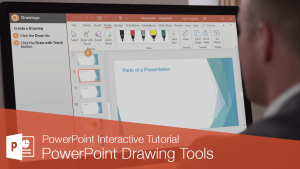
What is PowerPoint Expert Tutorial?

PowerPoint Expert Tutorial is an immersive learning experience aimed at empowering individuals and professionals to harness the full potential of Microsoft PowerPoint, one of the most widely used presentation software globally. It goes beyond the basics, offering in-depth insights into advanced techniques, design principles, and effective presentation strategies. Our tutorial provides a comprehensive education, encompassing everything from slide design to persuasive storytelling, turning ordinary presentations into extraordinary ones.

Features of PowerPoint Expert Tutorial Canada


Features of PowerPoint Expert Tutorial Canada

Features of PowerPoint Expert Tutorial Canada


Features of PowerPoint Expert Tutorial Canada

  1. Advanced Design Techniques: PowerPoint Expert Tutorial offers an in-depth exploration of advanced design principles. You’ll learn how to utilize typography, color theory, layout, and visual hierarchy to create slides that not only engage but leave a lasting impression on your audience.
  2. Effective Storytelling Mastery: PowerPoint Expert Tutorial Canada take you on a journey through the art of persuasive storytelling. You’ll discover how to structure your content for maximum impact, ensuring that your message is not only heard but also retained by your audience long after the presentation ends.
  3. Mastering Visual Aids: With our tutorial, you’ll gain the skills to seamlessly integrate graphics, multimedia, and animations into your presentations. These tools will not only enhance your message but also create a dynamic and immersive experience for your viewers.
  4. Customization and Branding Excellence: Understand how to align your slides with your unique branding elements, resulting in a consistent and professional look. Your audience will recognize and remember your message, bolstering your brand identity.
  5. Delivery and Confidence Building: PowerPoint Expert Tutorial Canada offer techniques to bolster your confidence and elevate your delivery skills. You’ll learn how to present with poise, authority, and a captivating presence that holds your audience’s attention.

Why Choose Us For PowerPoint Expert Tutorial:

Expertise: Our PowerPoint Expert Tutorial stands apart because it’s meticulously crafted by seasoned professionals who are veterans in the fields of presentation design and delivery. Our expert designers and trainers http://awasam.com bring to the table years of industry experience, having worked on a multitude of projects across various sectors. This wealth of knowledge allows us to infuse the tutorial with the insights, techniques, and strategies used by industry experts. By choosing us, you’re not just gaining access to a tutorial but to a treasure trove of experience. We ensure you learn from the best, and it’s this expertise that sets us apart as a leader in the field of presentation education.

Customized Learning Experience: At PowerPointPresentationHelp.com, we recognize that every client is unique, with distinct needs, goals, and objectives. This understanding is at the core of our approach. Our tutorial is not one-size-fits-all; it’s a tailored learning experience. It allows you to focus on the specific areas that matter most to you. We assess your needs and craft a learning journey that aligns with your goals. This ensures that you get the most out of the training, making your investment in learning highly effective and efficient.

Practical Application: PowerPoint Expert Tutorial Canada understand that theory is just one part of the learning process. What truly sets our PowerPoint Expert Tutorial apart is our commitment to practical application. We don’t just teach you the concepts; we guide you through hands-on exercises and provide real-world examples. This approach allows you to immediately apply what you’ve learned in your own presentations. The gap between knowledge and practical use is bridged seamlessly, providing you with the skills and confidence to create impactful presentations that engage and persuade your audience.

Convenience and Flexibility: We value your time and understand the constraints of busy schedules. With our tutorial, you have the convenience and flexibility to learn at your own pace and on your own schedule. No more rushing to fit into a fixed course schedule or sacrificing other commitments. Our tutorial is designed to be accessible at your convenience, ensuring that your learning experience is stress-free and accommodating of your individual needs and timetable.

Cost-Effective Learning: Investing in education is often seen as a costly endeavor. However, our PowerPoint Expert Tutorial redefines learning by offering a cost-effective and efficient way to acquire the skills and knowledge required for creating professional presentations. You won’t need to enroll in expensive courses or hire costly consultants. Instead, you can invest in our tutorial, equipping yourself with the expertise needed to craft compelling presentations. It’s a smart financial decision that empowers you to create impactful presentations while staying within budget.

By choosing us, you’re not just selecting a tutorial; you’re choosing a partner in your journey to becoming a presentation expert. We bring expertise, customization, practical application, convenience, and cost-effectiveness to your fingertips, ensuring that you not only learn but excel in the art of presentation design and delivery. Your success story begins with us.

Advantages of using PowerPoint Expert Tutorial Canada:

Empowerment: Our PowerPoint Expert Tutorial is not just a learning resource; it’s a catalyst for empowerment. By investing in this tutorial, you equip yourself with the expertise and tools to become a presentation expert. This empowerment is a game-changer, enhancing both your professional and academic endeavors. Armed with the knowledge and skills to create compelling presentations, you’ll have the capacity to take your projects, proposals, and ideas to new heights of success. Whether you’re in the boardroom, classroom, or any setting, you’ll find yourself in a position of influence, making a significant impact with your presentations.

Boosted Confidence: One of the remarkable byproducts of mastering presentation skills is the confidence it instills in you. Acquiring the knowledge and skills to create exceptional presentations inevitably boosts your confidence. No longer will you approach public speaking or presentations with trepidation. Instead, you’ll stand before your audience with a newfound sense of authority and self-assurance. You’ll deliver your message with poise, knowing that your presentation is not just good but great. This newfound confidence transcends presentations; it permeates your professional and personal life, making you a more assertive and influential communicator.

Time and Cost Savings: Time and cost are precious resources, and our PowerPoint Expert Tutorial Canada is designed to save you both. Mastering PowerPoint through our tutorial translates to valuable time savings because you’ll be well-equipped to create impactful presentations independently. No more struggling with design dilemmas or wasting hours on frustrating trial and error.

You can efficiently and effectively craft your presentations, ensuring they align with your objectives and meet your high standards. This not only saves time but also eliminates the need for costly outside design services. You’ll no longer be reliant on expensive consultants or design agencies, which translates to substantial cost savings over the long term.

Enhanced Communication: Communication is at the heart of every successful endeavor, and superior presentations are key to clearer and more effective communication. By investing in our PowerPoint Expert Tutorial, you’ll elevate your communication to new levels. Your presentations will be more engaging, more persuasive, and more impactful. This, in turn, leads to stronger engagement from your audience and leaves a more profound impact.

Your message won’t just be heard; it will be remembered. Whether you’re delivering a sales pitch, academic lecture, or corporate report, your enhanced communication skills will set you apart, ensuring that your ideas resonate and your audience understands and appreciates your message.

By choosing our PowerPoint Expert Tutorial Canada you’re not just learning PowerPoint; you’re investing in empowerment, confidence, time and cost savings, and enhanced communication. This investment is not just in yourself but in your future success. It’s a smart decision that equips you with the tools to excel in the art of presentation, amplifying your influence and impact. The advantages are not just limited to your presentations; they extend to every aspect of your professional and personal life.

The Future of PowerPoint Expert Tutorial

The future of PowerPoint Expert Tutorial is a dynamic and exciting journey. As technology continues to evolve, we are committed to keeping our content updated. Expect new features, emerging trends, and cutting-edge techniques to empower you to remain competitive in an ever-evolving digital landscape. We are dedicated to ensuring that you have access to the latest tools and insights to continue refining your presentation skills.

In Conclusion

Your journey to unlocking your full presentation potential begins with PowerPoint Expert Tutorial Canada from PowerPointPresentationHelp.com. Select us, and you’ll embark on a transformative path of learning and growth. This invaluable resource equips you with the skills and knowledge required to create presentations that captivate and inspire, leaving a lasting impact on your audience.

Don’t wait – start your journey today and witness the transformation as your presentations become extraordinary. Your success story starts here. Join us, and together, we’ll embark on this exciting journey towards becoming a presentation expert!