Healthcare Financial Management Assistance

 In this unit, your assignment is to submit a research paper topic that gives basic background information about your healthcare facility and presents current budget information. The first part of this assignment is to decide which facility that you wish to analyze. Create your own facility name, background, and information about what type of healthcare facility it is. Give a brief description of your facility, including information about its history, its current financial situation, and whether it is for-profit or nonprofit.

Part two of the assignment for this unit is to outline the budget information for your facility for 2018. Include the revenues, costs, and profits (or losses). With this information, present a budget and actual results for the facility with the difference in dollar-terms and percentages based on the actual numbers. Explain the relationships of these. Based on this information, calculate and interpret the revenue, cost, and profit variances for the facility. You are creating this facility, so the budget information is up to you. For instance, if you want to concentrate on turning operations around in a struggling facility, that facility might face losses in its 2018 budget.

Part three of the assignment for this unit is to research the topics listed at the top of this assignment for the final research paper, list three of the five sources that you will use in your research paper, and give a brief description (e.g., two or three sentences) of each source. At least two of these must come from the CSU Online Library.

Your completed research paper topic should be a minimum of two pages in length.

7-2 Final Project Data Analysis Milestone Four: Data Analysis

Overview: Your task is to help the organization answer their question by critically analyzing the data. You will run descriptive statistics and a statistical test, create a graph, interpret the results, and present the results and recommendations to non-technical decision makers in the form of a data analysis. Keep in mind that it is your job to do this from a statistical standpoint. Be sure to justify your conclusions and recommendations with appropriate statistical support. 

Prompt: In Milestone Three, you created a table listing the statistics you were going to complete to investigate your health question. In Milestone Four, you will actually complete these calculations. Specifically, you must address these critical elements:

I. Data Analysis 

A. Graphs: In this section, you will use graphical displays to examine the data. 

1. Create at least one graph that gives a sense of the potential relationship between the two variables that form your chosen health question. Include the graph and discuss why you selected it as opposed to others. 

B. Conduct an appropriate statistical test to answer your health question. 

C. Explain why this test is the best choice in this context. 

D. Analysis of Biostatistics: Use this section to describe your findings from a statistical standpoint. Be sure to: 

1. Present key biostatistics from the graph(s) and statistical test and explain what they mean. Be sure to include a spreadsheet showing your work or a copy of your StatCrunch output as an appendix. 

2. What statistical inferences or conclusions can you draw based on the results of your statistical test, descriptive statistics and graph? Justify your response.

Guidelines for Submission: You will submit screenshots of the graphs, the completed table from Milestone Three, and 2–4 paragraphs explaining and interpreting these items in a single Microsoft Word document with double spacing, 12-point Times New Roman font, one-inch margins, and using APA format for any citations.

Milestone Three as well as Rubric for this assignment are attached below. Please follow rubric. 

Social Media Plan – Rough Draft

Module 04 Content

  1. For this module, we’ll be fleshing out your work from previous weeks to complete a rough draft of your final project. You have already identified your topic and the social media choices for your project, and done research on comparable brands or sites.

    Now it’s time to get it all ready. This week, you should spend more time researching comparable options on your social media choices. Then it’s time to put it together!

    First, you should put together your overview of the project. This starts with the description of your business or brand. Write about what it is and what you want for it, and add the research you have found on comparable businesses or brands. Then what are the goals you have for the business or brand? What are your general goals with social media for it? What audience are you aiming to reach?

    Now on to the social media aspect of the project. If you have a real business, brand, or site to work on, you can start by putting the site profiles into the 4 social media sites you’ve chosen (e.g. Facebook, Twitter, etc.). Screenshots will work for these that you have really made. If you don’t really have a business or brand, you do not need to create faux profiles. However, you should write the information you would include in your profile for each one.

    Then, for each social media site, write about your goal for that site, how you will accomplish them, and some ideas for posts or pins. Who is your audience? When and where can you best reach them? How can you really use social media to work for you?

    This project should have at least 1-2 pages for your overview and then approximately 1-2 pages per social media site. So the draft will be 5 – 10 pages long.

    There will be the option to present your project to your instructor and class next week in the live classroom, so begin thinking about if this is something you’d like to do.

    Submit your completed assignment by following the directions linked below. Please check the Course Calendar  for specific due dates.

Security Organ & Admin

  1. Question 13 Points1. The logical set of tangible elements that protect selected assets from damage, compromise, and loss is called:
    1. The security system
    2. Physical security
    3. Access control
    4. Intrusion detection
  2. Question 23 PointsA security scheme that features several rings of protection that in the abstract look like a bull’s eye is called:
    1. Ring Protection
    2. Attenuated protection
    3. Concentric protection
    4. Bull’s eye protection
  3. Question 33 PointsThe usual starting point in assessing risk at a facility is the:
    1. Area in which assets are located
    2. Front door
    3. Security guard force
    4. Perimeter
  4. Question 43 PointsA river adjacent to a protected facility is called:
    1. Natural barrier
    2. An access route
    3. A vulnerability
    4. A man-made barrier
  5. Question 53 PointsThe protective capability of lighting is diminished:
    1. When cones of light overlap one another
    2. During winter months
    3. In the absence of observation by a security officer force
    4. When the lamp is fluorescent
  6. Question 63 PointsA well-designed and skillfully managed identification system will not require the involvement of guards.
    1. True
    2. False
  7. Question 73 PointsA system that regulates movement into, within, and from a protected area or facility is called:
    1. An intrusion detection system
    2. An access control system
    3. A security system
    4. A restricted system 
  8. Question 83 PointsThe justification for inspecting vehicles leaving a nuclear power plant is based on the:
    1. Safety of the public
    2. Dollar value of removable items and materials
    3. Philosophy of management
    4. Cultural inclinations of the workforce
  9. Question 93 PointsFences, lights, sensors, and locks are:
    1. Not to be confused with walls, doors, and safes
    2. Manufactured by one company when they are to be used for a security purpose
    3. Security standards
    4. Physical security safeguards
  10. Question 103 PointsIt would be a mistake to depend on the technology of an electronic access control system:
    1. When the system was purchased from a non-U.S. manufacturer
    2. After the system has been operating more than one year
    3. And the software that drives it
    4. And neglect the human side of the system
  11. Question 113 Points. Business fraud usually takes the form of repetitive, incremental thefts.
    1. True
    2. False
  12. Question 123 PointsOne of the most frequently investigated incidents in the business environment is:
    1. Embezzlement
    2. Fraud
    3. Employee theft
    4. Bribery 
  13. Question 133 PointsA management that wishes to eliminate employee theft should do all of the following EXCEPT:
    1. Decide it is unacceptable
    2. Do something about it
    3. Involve employees in bringing it to an end
    4. Grant amnesty once for first-time offenders
  14. Question 143 PointsWhich of the following is NOT an indicator of employee theft?
    1. Borrowing
    2. Living above apparent income level
    3. Writing bad checks
    4. Speaking out against the company
  15. Question 153 PointsAn alleged injury was not witnessed, the injury not reported immediately, and treatment not administered by a physician approved in the company’s health benefits plan. These circumstances point to a false:
    1. Workers’ compensation claim
    2. Medical services claim
    3. Finding in a civil law suit
    4. Invoice
  16. Question 163 PointsThe main administrative device for capturing employment and personal references is the:
    1. Employment application form
    2. Telephone
    3. Personal computer
    4. Assortment of public records
  17. Question 173 PointsPre-employment screening is designed to detect and filter out applicants that are felons, violence-prone individuals, drug abusers, and people that pose safety risks. This is done to:
    1. Filter out persons with learning problems
    2. Protect the community at large
    3. Reduce costs associated with theft, injury, accidents, and medical assistance benefits
  18. Question 183 PointsOne of the reasons employers conduct pre-employment background checks is because:
    1. Regular employees expect screening of new employees
    2. They wish to avoid public disapproval c. Laws and regulations place a duty on them to maintain a safe and secure working environment d
    3. Laws and regulations place a duty on them to maintain a safe and secure working environment
  19. Question 193 PointsCertain questions cannot be asked on an employment application form, or for that matter, in any manner connected to a hiring decision. Which of the following is NOT one of those questions?
    1. Are you married?
    2. How many children do you have?
    3. Where were you born?
    4. Do you have any disabilities?
  20. Question 203 Points Checking references by mail or e-mail is not as effective as:
    1. Checking in person or by phone
    2. Reading the job description
    3. Talking to the applicant’s potential supervisor
    4. Sending a form to the registrar of the college attended by the applicant
  21. Question 213 PointsAn organization’s program for fire prevention and response often includes:
    1. A floor warden program
    2. Written approval of local law enforcement
    3. A requirement for an access control system
    4. Provisions for dealing with natural disasters 
  22. Question 223 PointsA Mutual Aid and Assistance Agreement:
    1. Is an agreement in which separate agencies commit to working with one another to deal with major emergencies
    2. Does not include a provision for one agency to provide equipment and personnel to assist another agency during a major emergency
    3. Is a federal government device to promote public acceptance of the Federal Emergency Management Agency (FEMA)
  23. Question 233 PointsThe Incident Command System (ICS):
    1. Is a substitute for the National Incident Management System (NIMS)
    2. Is a system for managing a major incident at the-scene
    3. Can only be implemented by a senior representative of the Federal Emergency Management Agency (FEMA)
  24. Question 243 PointsA fire control team:
    1. Is committed to fire incidents only
    2. Answers to the senior fire warden
    3. Must include security officers
    4. Includes maintenance personnel
  25. Question 253 PointsAn Emergency Operating Plan (EOP) does all of the following EXCEPT:
    1. Assign responsibilities
    2. Identify likely incidents
    3. Dedicate particular resources
    4. Dictate cost-containment 
  26. Question 263 PointsThe Business Continuity Plan (BCP) is:
    1. Completely separate from the EOP
    2. Never a part of an EOP
    3. Integral to the EOP
  27. Question 273 Points A properly planned and executed BCP:
    1. Falls into the exclusive realm of the CSO
    2. Is written by the CSO
    3. Can be the key in preventing the death of a company
  28. Question 283 PointsRecovery follows readiness and precedes:
    1. Mitigation
    2. Response
    3. Restoration
  29. Question 293 Points The acronym RTO stands for:
    1. Reasonable termination objective
    2. Response time overall
    3. Recovery time objective
  30. Question 303 PointsIT governance is a term related to policies, procedures, and practices. 
    1. True
    2. False
  31. Question 313 PointsThe final decision-maker in the acquisition of a security system to protect information assets belonging to the company is:
    1. The chief operations officer
    2. The chief executive officer
    3. The chief security officer
  32. Question 323 PointsThe risk of information loss is present:
    1. Except when information is under lock and key
    2. When productive use of the information ends
    3. When a threat agent has targeted the information 
  33. Question 333 PointsWhich of the following is NOT a type of sensitive information?
    1. Proprietary business and technical information
    2. Personal data concerning applicants, employees, and former employees
    3. Information developed for presentation in a company’s annual report

Jet Performance/Jet Propulsion Research

In this module, some of the background considerations for jet and propeller aircraft performance were introduced by taking a closer look at the different propulsion systems. During the next module, you will apply these fundamentals to your aircraft example and its unaccelerated performance. Nevertheless, since all of your example aircraft are propeller-driven, it makes sense to divert your attention for a moment to introduce some of the application of performance principles in jet aircraft. 

Choose a jet aircraft to use as your example for this activity.  It should not be an exotic jet aircraft, as you will need to find data online for the aircraft.  If you choose a military aircraft, make sure you are not using classified data to support your work.  Only use data that is available to all on the internet.  You will then use the data you gathered for this particular aircraft to show examples of your performance problems and how you derived them.

To provide an outlook to some of the aspects of next module’s unaccelerated performance, select a jet aircraft of your choice, choose three (3) of the following items of performance, and prepare an instructional presentation (utilizing a presentation tool of your choice – see resources in the Online Tools section) that explains in-depth how to find these different items of performance for a jet aircraft. This will be a standalone presentation and will not be attached to your comprehensive presentation project. Available choices: 

  • maximum forward speed in level flight
  • absolute ceiling
  • best angle of climb airspeed
  • angle of climb
  • best rate of climb airspeed
  • rate of climb
  • maximum endurance airspeed
  • maximum range airspeed
  • influence of weight on performance
  • influence of altitude on performance
  • influence of configuration on performance

mixed media project

Mixed Media Assignment.

1. Please upload your work as a single file, if possible. Microsoft power point, or word document.

PLEASE INCLUDE YOUR LAST AND FIRST NAME IN THE FILENAME!!!

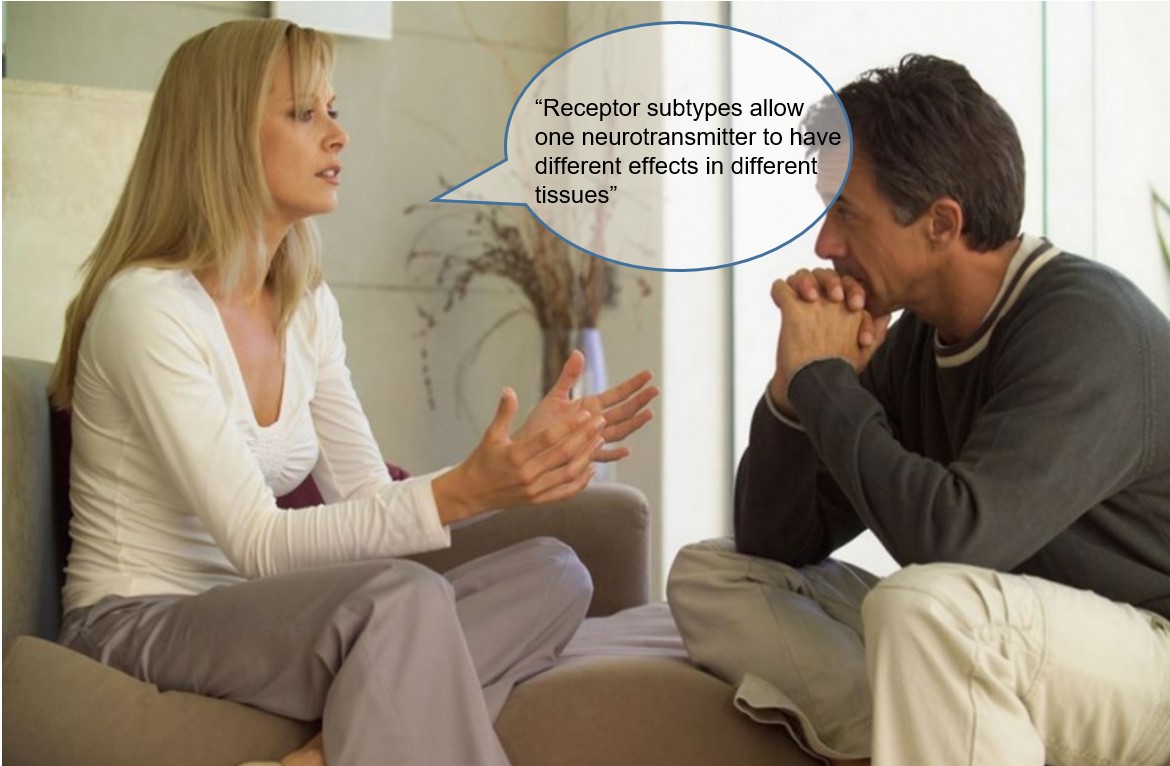
2. Don’t forget to provide an explanation of the meme and the physiology and why it works, when necessary. I am not familiar with all the memes.

Summary:

This assignment will consist of generating several media products designed to teach physiology concepts, principles or standard information.

Modern methods of dissemination of information must be used to produce UNT BIOL3800 Animal Physiology materials that can engage the public with factually accurate information, devoid of bias.

Using information learned in this course, you can design your media in nearly any way you wish. For example, you can produce an infographic (see below), or a meme, or a video/song, or you can come up with a better format for delivering your message of physiology.

NOTE: You don’t have to perform or post the information if you don’t want to. It can be private between you and I. However, I encourage you all to share these assignments with the world, as study tools for the public. DO NOT USE copyrighted materials without permission (it is easy to get permission for educational use, but you need to get permission – usually just an email.)

One way around the copyright issue is to use provided material from a website. There are meme generators, tic tocs, infographic makers, and all sorts of content that is already paid for by the app companies. There may be a watermark on their product, but that is the price we pay for being able to benefit from someone else’s creativity!

You must turn in up to 20 points worth of mixed media (point values below). You can mix and match the listed assignment types to get up to a possible 20 points, or you can propose other projects not listed here that we can negotiate a point value, depending on the effort (e.g. maybe you want to do a sculpture – ask, and we can decide how many points that could be worth). If collaboration is necessary for your project (e.g. you are playing a song and need a band), you must get that approved.  

Media Type

Point Value

Meme

4

Recorded Song

Negotiable

InfoGraphic

10

News Story

10

Video

Negotiable up to 20

Artwork

Negotiable up to 20

New Better Book Figure

4

Other ideas?

Negotiable up to 20

Examples of Media types and the point values. You need a total of 20 points.

Examples of a product.

Percent

Category

40

Factual

Each inaccuracy reduced your possible points for each product by 10 percent.

20

Original

Your work should be different than what is already out there.

Is this just the same figure in different color? Or, is it somehow different or better. It doesn’t take much. A change in wording along with a reorganization could be enough to make an original figure.

20

Execution

Your work should be well-executed and professional looking, even if it is just a meme.

Is the item well produced? For example: Are the images clean and of decent quality? Is the graphic well arranged? Is the sound clear?

10

Legend/Description

Provide a short description/explanation of your product. In most cases a couple of sentences or a paragraph will suffice. Include any cultural references that I may not know about. Explain any humor, if present and provide a full description of any relevant pieces or parts of your product, if not fully obvious. For example, provide lyrics if you record a song.

10

Relevance

Is your product relevant for the F you can prove the efficacy of your product, you get up to 5 points towards this project. The burden of proof is on you. Is your meme effective?

Examples

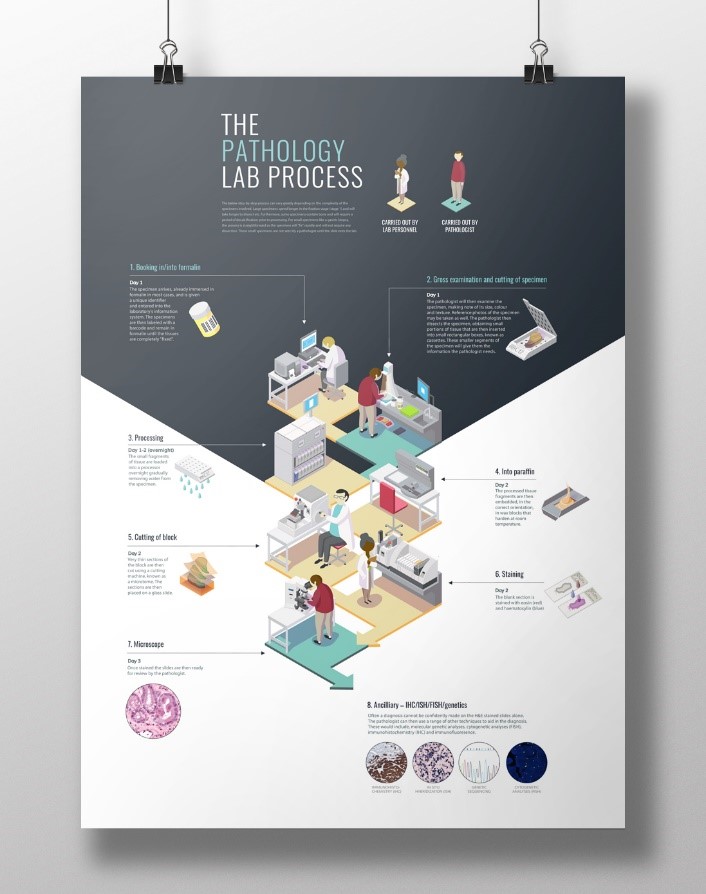
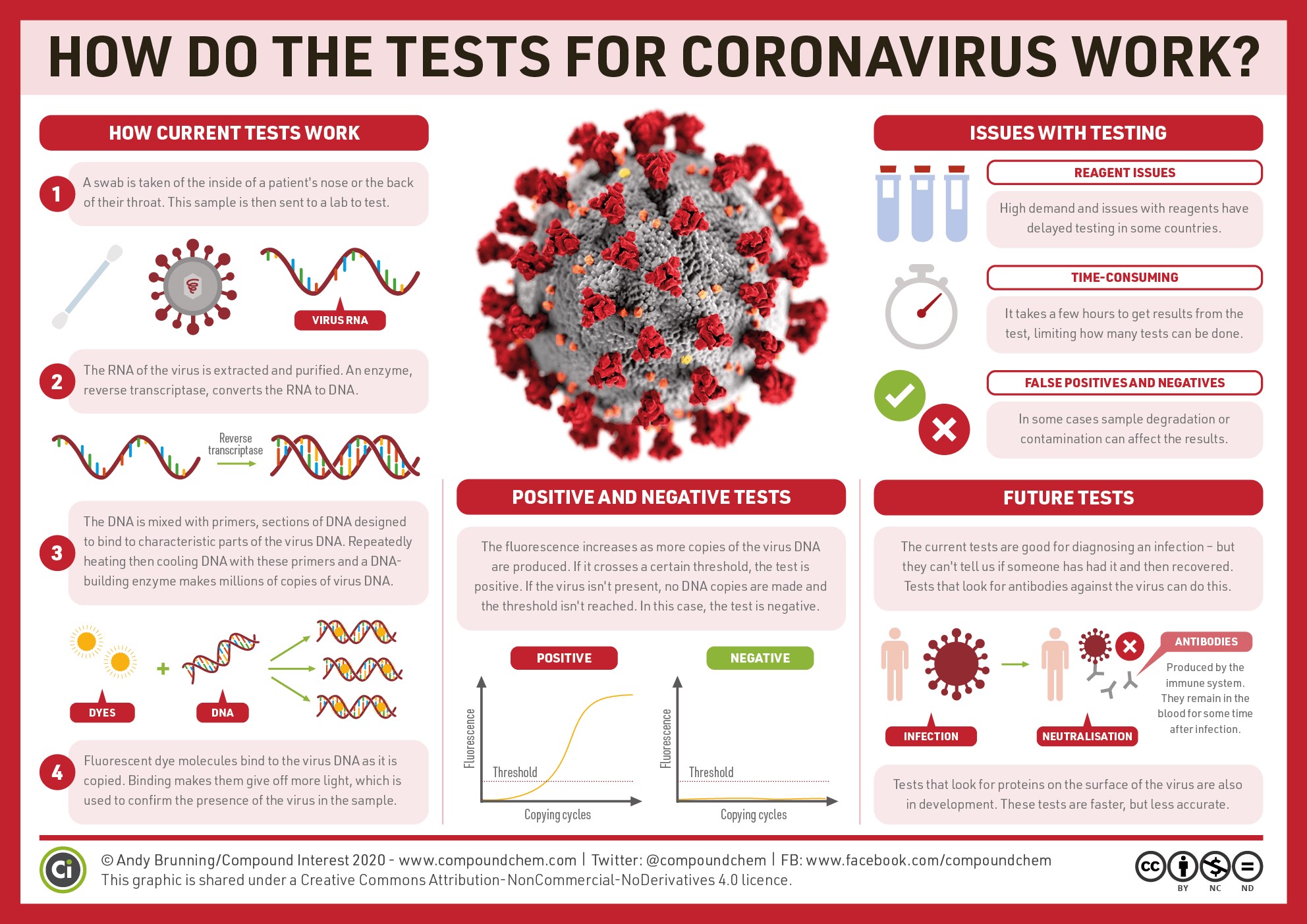
Infographics (a clipped mixture of “information” and “graphics”) are graphic visual representations of information, data, or knowledge intended to present information quickly and clearly. They can improve cognition by utilizing graphics to enhance the human visual system’s ability to see patterns and trends (see Wikipedia.org).

Example of an InfoGraphic:

The Pathology Lab Process:
PathLab Process.jpg

Example of an InfoGraphic.

How do the Tests for Coronavirus Work?
Corona INfographic.jpg

Example Meme:

two Receptors.jpg

This one above only works in class. It is poorly executed. The rest of the example memes are also poorly executed, but less so.

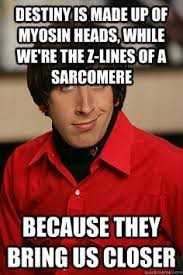
Example Meme:
Sarcomeres Meme.jpg

If you are not familiar with the meme, you might not understand this one, but the science is good enough.
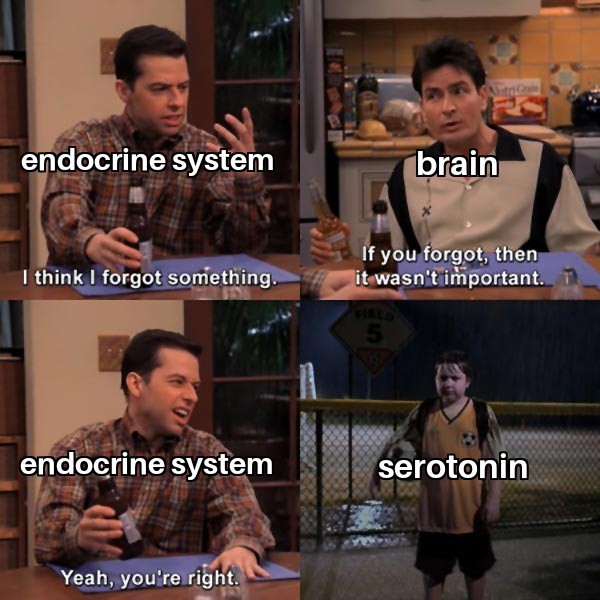
Charlie Sheen Meme.jpg

I haven’t seen this show, so a good explanation is important for me to grade your assignment. 

Tips

  1. Avoid wordy text. Simple is best in most cases.
  2. Use a template if available or (many infographic tools have a library of templates, meme generators our out there and so are video templates like tic toc —you don’t have to start from scratch!)
  3. Don’t forget citations! You must cite work that isn’t yours. You must cite ideas that are not yours. Don’t cheat. So, don’t rip copyrighted content.
  4. You can use images from the internet, but they must be cited, and if you use some copyrighted content, you should get permission. Usually, it is easy to get permission to use copyrighted stuff IF IT IS FOR EDUCATION. This isn’t always the case so be sure you are not taking someone else’s material without permission.
    1. You can email the owner/publisher and they will give you permission. Often there is a disclaimer on a publisher’s website somewhere that may give permission for educational or nonprofit use. Be sure to cite that permission as a web address.
    2. Place all citation in small (but readable) font next to or underneath the image. The author’s last name and date, or website.com (Links to an external site.) is sufficient.
    3. If you are unsure, please ask or refer to the copyright statement in the Syllabus and in the UNT student handbook.

Presentation Topic and Organization

Required Resources

Read/review the following resources for this activity:

Textbook: Chapter 11

Lesson

WEEK4 ASSIGNMENT TEMPLATE 2( USE THE ATTACHED TEMPLATE BELOW TO COMPLETE THE ASSIGNMENT)

Minimum of 3 scholarly sources (in addition to the textbook/lesson)

Introduction
This assignment is an individual assignment that will start you on the road to completing your Week 7 PowerPoint presentation.

PowerPoint Project Timeline

Due

Description

Week 4

PowerPoint Topic and Organization

Week 5

PowerPoint Outline Rough Draft

Week 6

PowerPoint Outline Final Draft, Images, and Sources

Week 7

PowerPoint Presentation

Week 8

PowerPoint Evaluation

Instructions
Although the lesson for this week already addressed this information, for ease of assignment completion, here it is again.

Here is a list of topics from which you can choose:

1. Verbal communication

2. Nonverbal communication

3. Public speaking

4. Cross-cultural communication in the workplace

5. Listening in communication

6. Gender and communication

7. Communication and care management

8. Perception

9. Conversation skills

0. Communication, technology, and social media

Use this example to guide your submission for this assignment.

1. Choose a topic: #3 Public Speaking

2. Narrow the topic to identify a specific purpose: Managing anxiety when public speaking

3. Develop a one-sentence thesis: There are three important steps to take in order to manage anxiety when doing a presentation.

4. Establish your main points for the PowerPoint:

Main Point #1: Visualize doing the presentation well

Main Point #2: Take a deep breath before you begin

Main Point #3: Focus on the information rather than the performance

5. Three sources (Include the titles of three potential sources here.) 

Source 1

Source 2

Source 3

With the above example, the topic was narrowed to managing anxiety. This topic could have also been narrowed to eliminating “um’s”, presenting while using a visual aid, etc. There are many different ways in which you can make the topic of your choice more specific to your interests.

Now it is your turn. In order to write an effective thesis, you will need to do your research. Find a minimum of three scholarly sources that you plan to use to inform your teaching. Use the template for Assignment 2 to guide your organization of this information. You will receive feedback concerning your topic choice, thesis, organization, and sources in the grading process.

Reflection
At the end of your submission, add a reflection paragraph addressing your consideration of a cross-cultural topic and why or why not this topic what chosen. What is about cross-cultural communication that interests you, concerns you, or creates a barrier for you.

Note: Any topic you chose is fine, but this is a chance to reflect on the added component of cross-cultural communication.

Writing Requirements (APA format)

Length: 0.5-1 page (not including title page or references page)

1-inch margins

Double spaced

12-point Times New Roman font

Title page

References page is not required as the 3 sources are listed in Section 5.

Week 2 (Enterprise Risk Management)

The reading this week discusses strategy and how ERM can be integrated with an organization’s overall strategy. Prepare a research paper on some of the various issues, protocols, methods, frameworks you found and discuss how – if possible – organizations can use ERM as strategy. It is perfectly acceptable if you deem ERM cannot be used as strategy, just back up your claim with scholarly research and justifications.

Your paper should meet these requirements: 

Be approximately four to six pages in length, not including the required cover page and reference page.

Follow APA 7 guidelines. Your paper should include an introduction, a body with fully developed content, and a conclusion.

Support your answers with the readings from the course and at least two scholarly journal articles to support your positions, claims, and observations, in addition to your textbook.

Be clearly and well-written, concise, and logical, using excellent grammar and style techniques. You are being graded in part on the quality of your writing.

By submitting this paper, you agree: (1) that you are submitting your paper to be used and stored as part of the SafeAssign™ services in accordance with the Blackboard Privacy Policy; (2) that your institution may use your paper in accordance with your institution’s policies; and (3) that your use of SafeAssign will be without recourse against Blackboard Inc. and its affiliates.

week 7 patho knowledge check

QUESTION 1

  1. A 52-year-old obese Caucasian male presents to the clinic with a 2-day history of fever, chills, and right great toe pain that has gotten worse. Patient states this is the first time that this has happened, and nothing has made it better and walking on his right foot makes it worse. He has tried acetaminophen, but it did not help. He took several ibuprofen tablets last night which did give him a bit of relief. Past medical history positive or hypertension treated with hydrochlorothiazide and kidney stones. Social history negative for tobacco use but admits to drinking “a fair amount of red wine” every week. General appearance: Ill appearing male who sits with his right foot elevated. Physical exam remarkable for a temp of 101.2, pulse 108, respirations 18 and BP 160/88. Right great toe (first metatarsal phalangeal [MTP]) noticeably swollen and red. Unable to palpate to assess range of motion due to extreme pain. CBC and Complete metabolic profile revealed WBC 14,000 mm3 and uric acid 8.9 mg/dl. The APRN diagnoses the patient with acute gout.

    Question 1 of 2:

    Describe the pathophysiology of gout.

    — Font family —- Font size —- Format –HeadingSub Heading 1Sub Heading 2ParagraphFormatted Code– Font family –Andale MonoArialArial BlackBook AntiquaComic Sans MSCourier NewGeorgiaHelveticaImpactSymbolTahomaTerminalTimes New RomanTrebuchet MSVerdanaWebdingsWingdings– Font size –1 (8pt)2 (10pt)3 (12pt)4 (14pt)5 (18pt)6 (24pt)7 (36pt)Path: pWords:0

1 points   

QUESTION 2

  1. A 52-year-old obese Caucasian male presents to the clinic with a 2-day history of fever, chills, and right great toe pain that has gotten worse. Patient states this is the first time that this has happened, and nothing has made it better and walking on his right foot makes it worse. He has tried acetaminophen, but it did not help. He took several ibuprofen tablets last night which did give him a bit of relief. Past medical history positive or hypertension treated with hydrochlorothiazide and kidney stones. Social history negative for tobacco use but admits to drinking “a fair amount of red wine” every week. General appearance: Ill appearing male who sits with his right foot elevated. Physical exam remarkable for a temp of 101.2, pulse 108, respirations 18 and BP 160/88. Right great toe (first metatarsal phalangeal [MTP]) noticeably swollen and red. Unable to palpate to assess range of motion due to extreme pain. CBC and Complete metabolic profile revealed WBC 14,000 mm3 and uric acid 8.9 mg/dl. The APRN diagnoses the patient with acute gout.
    Question 2 of 2:

    Explain why a patient with gout is more likely to develop renal calculi. 

    — Font family —- Font size —- Format –HeadingSub Heading 1Sub Heading 2ParagraphFormatted Code– Font family –Andale MonoArialArial BlackBook AntiquaComic Sans MSCourier NewGeorgiaHelveticaImpactSymbolTahomaTerminalTimes New RomanTrebuchet MSVerdanaWebdingsWingdings– Font size –1 (8pt)2 (10pt)3 (12pt)4 (14pt)5 (18pt)6 (24pt)7 (36pt)Path: pWords:0

1 points   

QUESTION 3

  1. Stan is a 45-year-old man who presents to the clinic complaining of intermittent fevers, joint pain, myalgias, and generalized fatigue. He noticed a rash several days ago that seemed to appear and disappear on different parts of his abdomen. He noticed the lesion below this morning and decided to come in for evaluation. He denies recent international travel and the only difference in his usual routine was clearing some underbrush from his back yard about a week ago. Past medical history non-contributory with exception of severe allergy to penicillin resulting in hives and difficulty breathing. Physical exam: Temp 101.1 ˚F, BP 128/72, pulse 102 and regular, respirations 18. Skin inspection revealed a 4-inch diameter bull’s eye type red rash over the left flank area. The APRN, based on history and physical exam, diagnoses the patient with Lyme Disease. She ordered appropriate labs to confirm diagnosis but felt it urgent to begin antibiotic therapy to prevent secondary complications.  

    Question:

    What is Lyme disease and what patient factors may have increased his risk developing Lyme disease? 

    — Font family —- Font size —- Format –HeadingSub Heading 1Sub Heading 2ParagraphFormatted Code– Font family –Andale MonoArialArial BlackBook AntiquaComic Sans MSCourier NewGeorgiaHelveticaImpactSymbolTahomaTerminalTimes New RomanTrebuchet MSVerdanaWebdingsWingdings– Font size –1 (8pt)2 (10pt)3 (12pt)4 (14pt)5 (18pt)6 (24pt)7 (36pt)Path: pWords:0

1 points   

QUESTION 4

  1. A 72-year-old female was walking her dog when the dog suddenly tried to chase a squirrel and pulled the woman down. She tried to break her fall by putting her hand out and she landed on her outstretched hand. She immediately felt severe pain in her right wrist and noticed her wrist looked deformed. Her neighbor saw the fall and brought the woman to the local Urgent Care Center for evaluation. Radiographs revealed a Colles’ fracture (distal radius with dorsal displacement of fragments) as well as radiographic evidence of osteoporosis. A closed reduction of the fracture was successful, and she was placed in a posterior splint with ace bandage wrap and instructed to see an orthopedist for follow up.  

    Question:

    What is osteoporosis and how does it develop? 

    — Font family —- Font size —- Format –HeadingSub Heading 1Sub Heading 2ParagraphFormatted Code– Font family –Andale MonoArialArial BlackBook AntiquaComic Sans MSCourier NewGeorgiaHelveticaImpactSymbolTahomaTerminalTimes New RomanTrebuchet MSVerdanaWebdingsWingdings– Font size –1 (8pt)2 (10pt)3 (12pt)4 (14pt)5 (18pt)6 (24pt)7 (36pt)Path: pWords:0

1 points   

QUESTION 5

  1. A 42-year-old woman presents to the clinic with a four-month history of generalized joint pain, stiffness, and swelling, especially in her hands. She states that these symptoms have made it difficult to grasp objects and has made caring for her 6 and 4-year-old children problematic. She admits to increased fatigue, but she thought it was due to her stressful job as well as being a single mother. No significant past medical history but recalls that one of her grandmothers had “crippling” arthritis. Physical exam remarkable for bilateral ulnar deviation of her hands as well as soft, boggy proximal interphalangeal joints. The metatarsals of both of her feet also exhibited swelling and warmth. The diagnosis for this patient is rheumatoid arthritis.

    Question:

    Explain why patients with rheumatoid arthritis exhibit these symptoms and how does it differ from osteoarthritis?

    — Font family —- Font size —- Format –HeadingSub Heading 1Sub Heading 2ParagraphFormatted Code– Font family –Andale MonoArialArial BlackBook AntiquaComic Sans MSCourier NewGeorgiaHelveticaImpactSymbolTahomaTerminalTimes New RomanTrebuchet MSVerdanaWebdingsWingdings– Font size –1 (8pt)2 (10pt)3 (12pt)4 (14pt)5 (18pt)6 (24pt)7 (36pt)Path: pWords:0

1 points   

QUESTION 6

  1. A 32-year-old Caucasian male presents to the office with complaints of back pain, stiffness, especially in the morning, interrupted sleep due to pain, and difficulty in leaning over to tie his shoes. The patient first noticed these symptoms about 6 months ago but attributed them to his weekend basketball team’s games. He said he is exhausted due to sleep interruption. He has taken acetaminophen with some relief but says the naproxen seems to be working better. Married with 2 small children and works as a bank manager. Physical exam: Lungs clear but decreased chest excursion noted as well as decreased range of motion of hips and forward flexion, rotation, and lateral flexion restricted. Spine radiographs in the office revealed a slight kyphosis along with ankylosis at L5-S1. The APRN suspects the patient may have ankylosing spondylitis (AS). The APRN orders laboratory tests including an HLA-B27. 

    Question:

    Why did the APRN order an HLA-B27 lab? How would that lab result assist in understanding what ankylosing spondylitis?  

    — Font family —- Font size —- Format –HeadingSub Heading 1Sub Heading 2ParagraphFormatted Code– Font family –Andale MonoArialArial BlackBook AntiquaComic Sans MSCourier NewGeorgiaHelveticaImpactSymbolTahomaTerminalTimes New RomanTrebuchet MSVerdanaWebdingsWingdings– Font size –1 (8pt)2 (10pt)3 (12pt)4 (14pt)5 (18pt)6 (24pt)7 (36pt)Path: pWords:0

1 points   

QUESTION 7

  1. A 17-year-old male presents to the clinic with a chief complaint of pain in his right elbow. He says the pain is sharp, especially with pronation and supination.  He noticed the pain several weeks ago after his tennis team went to a regional competition. When he rests, the pain seems to go away. The pain is alleviated when he takes Naprosyn. No history of trauma or infection in the elbow. Past medical and social history noncontributary. He is a junior at the local high school and just started taking tennis lessons 2 months ago and his coach is working with him on his backhand serve. Focused physical exam revealed point tenderness over the lateral epicondyle which increases with pronation and supination. The APRN diagnoses him with lateral epicondylitis and orders a wrist splint to prevent wrist flexion.  

    Question:

    Why did the APRN feel a wrist splint would be helpful? What patient characteristics lead to this diagnosis.  

    — Font family —- Font size —- Format –HeadingSub Heading 1Sub Heading 2ParagraphFormatted Code– Font family –Andale MonoArialArial BlackBook AntiquaComic Sans MSCourier NewGeorgiaHelveticaImpactSymbolTahomaTerminalTimes New RomanTrebuchet MSVerdanaWebdingsWingdings– Font size –1 (8pt)2 (10pt)3 (12pt)4 (14pt)5 (18pt)6 (24pt)7 (36pt)Path: pWords:0

1 points   

QUESTION 8

  1. A 24-year-old Caucasian male was brought to the Emergency Room (ER) by Emergency Medical System (EMS) after suffering a “convulsion” episode at work that didn’t stop. Upon arrival to the ER, the patient was noted to be actively seizing with tonic-clonic movements. The patient’s boss accompanied him to the ER and gave a statement that the patient appeared in his usual good health earlier in the morning when they started working at their jobs in an auto parts store. The boss didn’t know of any past medical history. The boss brought along the patients next of kin information, and the patients mother told the ER that the patient has a prior history of seizures but hadn’t had a seizure in several years. The family thought he had “outgrown them.” Past medical history, other than previous seizures, and social history non-contributory. No history of alcohol or drug abuse and had no history of vaping. The ER APRN diagnoses the patient with status epilepticus and along with the ER staff, initiated appropriate treatment.

    Question:

    What is a seizure and why is status epilepticus so dangerous for patients?  

    — Font family —- Font size —- Format –HeadingSub Heading 1Sub Heading 2ParagraphFormatted Code– Font family –Andale MonoArialArial BlackBook AntiquaComic Sans MSCourier NewGeorgiaHelveticaImpactSymbolTahomaTerminalTimes New RomanTrebuchet MSVerdanaWebdingsWingdings– Font size –1 (8pt)2 (10pt)3 (12pt)4 (14pt)5 (18pt)6 (24pt)7 (36pt)Path: pWords:0

1 points   

QUESTION 9

  1. A 32-year-old while female presents to the Urgent Care with complaints of blurry vision and “fuzzy thinking” which has been present for the last several weeks or so. She works as an executive for an insurance company and put her symptoms down to the stress of preparing the quarterly report. Today, she noticed that her symptoms were worse and were accompanied by some fine tremors in her hands. She has been having difficulty concentrating and has difficulty voiding. She remembers her eyes were bothering her a few months ago and she went to the optometrist who recommended reading glasses with small prism to correct double vision. She admits to some weakness as well. No other complaints of fevers, chills, upper respiratory tract infections, or urinary tract infections. Past medical and social history noncontributory. Physical exam significant for 4th cranial nerve palsy. The fundoscopic exam reveals edema of right optic nerve causing optic neuritis. Positive nystagmuson positional maneuvers. There are left visual field deficits. There was short term memory loss with listing of familiar objects. The APRN tells the patient that she will be referred to a neurologist due to the high index of suspicion for multiple sclerosis (MS).  

    Question:

    What is multiple sclerosis and how did it cause the above patient’s symptoms? 

    — Font family —- Font size —- Format –HeadingSub Heading 1Sub Heading 2ParagraphFormatted Code– Font family –Andale MonoArialArial BlackBook AntiquaComic Sans MSCourier NewGeorgiaHelveticaImpactSymbolTahomaTerminalTimes New RomanTrebuchet MSVerdanaWebdingsWingdings– Font size –1 (8pt)2 (10pt)3 (12pt)4 (14pt)5 (18pt)6 (24pt)7 (36pt)Path: pWords:0

1 points   

QUESTION 10

  1. 61-year-old male complains of intermittent weakness and muscle fatigue that has progressively worsened over the past month. He was an internationally known extreme mountain climber but now he says he has difficulty in getting his morning paper. Initially he thought his symptoms of profound leg weakness and fatigue were due to his age and history of injuries from mountain climbing. Over the past few months, he also reports having noticed “blurriness” when working on his antique train collection or reading for long periods of time. He has developed intermittent double vision that seems to be worse when reading at bedtime. He also reports an occasional “droopy” eye lid. Past medical and social history noncontributory. Physical exam reveals weakness of right extra ocular muscle (EOM) with repetition. There is positive nystagmus and symmetrical upper extremity weakness with fasciculations. Lower extremities within normal limits (WNL).   The APRN suspects the patient has myasthenia gravis (MG).  

    Question:

    What is the underlying pathophysiology of MG?  

    — Font family —- Font size —- Format –HeadingSub Heading 1Sub Heading 2ParagraphFormatted Code– Font family –Andale MonoArialArial BlackBook AntiquaComic Sans MSCourier NewGeorgiaHelveticaImpactSymbolTahomaTerminalTimes New RomanTrebuchet MSVerdanaWebdingsWingdings– Font size –1 (8pt)2 (10pt)3 (12pt)4 (14pt)5 (18pt)6 (24pt)7 (36pt)Path: pWords:0

1 points   

QUESTION 11

  1. A 67-year-old male presents to the clinic along with his family with a chief complaint of having problems with his short-term memory. His family had dismissed these problems and attributed them to the aging process. Over time they have noticed changes in his behavior, along with increased confusion and difficulty completing basic tasks. He got lost driving home from the bowling alley and had to be brought home by the police department. He is worried that he may have Alzheimer’s Disease (AD). Past medical and social history positive for a minor cerebral vascular accident when he was 50 years old but without any residual motor or sensory defects. No history of alcohol or tobacco use. Current medication is clopidogrel 75 mg po qd.  Neurological testing confirms the diagnosis of AD. 

    Question:

    What is Alzheimer’s Disease and how does amyloid beta factor into the development and progression of the disease? 

    — Font family —- Font size —- Format –HeadingSub Heading 1Sub Heading 2ParagraphFormatted Code– Font family –Andale MonoArialArial BlackBook AntiquaComic Sans MSCourier NewGeorgiaHelveticaImpactSymbolTahomaTerminalTimes New RomanTrebuchet MSVerdanaWebdingsWingdings– Font size –1 (8pt)2 (10pt)3 (12pt)4 (14pt)5 (18pt)6 (24pt)7 (36pt)Path: pWords:0

1 points   

QUESTION 12

  1. A 22-year-old male was an unrestrained front seat passenger of a car traveling at 50 miles per hour. The driver swerved to avoid hitting a deer that darted in front of the car and hit a tree. The patient was ejected from the vehicle. He was awake and alert at the scene when the paramedics arrived, and his pupils were equal and reactive to light. He was placed in a hard-cervical collar per protocol and log rolled onto a long backboard. He was breathing spontaneously at the scene, but pulse oximetry in the EMS unit revealed a SaO2 of 88% on room air. He was placed on 100% oxygen via non-rebreather mask and was taken to a Level I trauma center with the following vital signs: 

    Vital signs: BP 90/50, Pulse 48 and regular, Respirations 24 and shallow with some use of accessory muscles, temp 95.2 F rectally. He was awake and answering questions appropriately but says he cannot feel his arms or legs. Glasgow Coma Scale 14. His skin was warm and dry with minor abrasions noted on his arms. According to family members, past medical history noncontributory and social history reveals only occasional alcohol use and no tobacco or vaping history. Full work up in the ED revealed a fracture-dislocation of C4 with assumed complete tetraplegia(formerly called quadriplegia). No other injuries noted He was given several liters of IV fluid, but his blood pressure remained low.  

    Question 1 of 2:

    Explain the differences between primary and secondary spinal cord injury (SCI)? 

    — Font family —- Font size —- Format –HeadingSub Heading 1Sub Heading 2ParagraphFormatted Code– Font family –Andale MonoArialArial BlackBook AntiquaComic Sans MSCourier NewGeorgiaHelveticaImpactSymbolTahomaTerminalTimes New RomanTrebuchet MSVerdanaWebdingsWingdings– Font size –1 (8pt)2 (10pt)3 (12pt)4 (14pt)5 (18pt)6 (24pt)7 (36pt)Path: pWords:0

1 points   

QUESTION 13

  1. A 22-year-old male was an unrestrained front seat passenger of a car traveling at 50 miles per hour. The driver swerved to avoid hitting a deer that darted in front of the car and hit a tree. The patient was ejected from the vehicle. He was awake and alert at the scene when the paramedics arrived, and his pupils were equal and reactive to light. He was placed in a hard-cervical collar per protocol and log rolled onto a long backboard. He was breathing spontaneously at the scene, but pulse oximetry in the EMS unit revealed a SaO2 of 88% on room air. He was placed on 100% oxygen via non-rebreather mask and was taken to a Level I trauma center with the following vital signs: 

    Vital signs: BP 90/50, Pulse 48 and regular, Respirations 24 and shallow with some use of accessory muscles, temp 95.2 F rectally. He was awake and answering questions appropriately but says he cannot feel his arms or legs. Glasgow Coma Scale 14. His skin was warm and dry with minor abrasions noted on his arms. According to family members, past medical history noncontributory and social history reveals only occasional alcohol use and no tobacco or vaping history. Full work up in the ED revealed a fracture-dislocation of C4 with assumed complete tetraplegia(formerly called quadriplegia). No other injuries noted He was given several liters of IV fluid, but his blood pressure remained low.  

    Question 2 of 2:

    What is spinal shock and how it is different from neurogenic shock? 

    — Font family —- Font size —- Format –HeadingSub Heading 1Sub Heading 2ParagraphFormatted Code– Font family –Andale MonoArialArial BlackBook AntiquaComic Sans MSCourier NewGeorgiaHelveticaImpactSymbolTahomaTerminalTimes New RomanTrebuchet MSVerdanaWebdingsWingdings– Font size –1 (8pt)2 (10pt)3 (12pt)4 (14pt)5 (18pt)6 (24pt)7 (36pt)Path: pWords:0

1 points   

QUESTION 14

  1. A 22-year-old male was an unrestrained front seat passenger of a car traveling at 50 miles per hour. The driver swerved to avoid hitting a deer that darted in front of the car and hit a tree. EMS on the scene noted a stellate fracture of the windshield on the passenger side. The patient was non-responsive at the at the scene when the paramedics arrived, and his pupils were unequal with the left pupil larger and sluggish to react to light. He was placed in a hard-cervical collar per protocol and log rolled onto a long backboard. He was breathing spontaneously at the scene, but pulse oximetry in the EMS unit revealed a SaO2 of 78% on room air. He was intubated at the scene for airway protection and transported to a Level 1 trauma center. Glasgow Coma Scale=3 

    After a full trauma work up, the patient was diagnosed with an isolated traumatic brain injury with acute subdural hematoma secondary to coup-contrecoup mechanism of injury. He was emergently taken to the operating room for craniotomy after which he was taken to the Intensive Care Unit (ICU) for close monitoring. He had an intracranial bolt for measurements of his intracranial pressure (ICP).
    Question 1 of 2:

    Explain the differences between primary and secondary traumatic brain injuries (TBIs)? 

    — Font family —- Font size —- Format –HeadingSub Heading 1Sub Heading 2ParagraphFormatted Code– Font family –Andale MonoArialArial BlackBook AntiquaComic Sans MSCourier NewGeorgiaHelveticaImpactSymbolTahomaTerminalTimes New RomanTrebuchet MSVerdanaWebdingsWingdings– Font size –1 (8pt)2 (10pt)3 (12pt)4 (14pt)5 (18pt)6 (24pt)7 (36pt)Path: pWords:0

1 points   

QUESTION 15

  1. A 22-year-old male was an unrestrained front seat passenger of a car traveling at 50 miles per hour. The driver swerved to avoid hitting a deer that darted in front of the car and hit a tree. EMS on the scene noted a stellate fracture of the windshield on the passenger side. The patient was non-responsive at the at the scene when the paramedics arrived, and his pupils were unequal with the left pupil larger and sluggish to react to light. He was placed in a hard-cervical collar per protocol and log rolled onto a long backboard. He was breathing spontaneously at the scene, but pulse oximetry in the EMS unit revealed a SaO2 of 78% on room air. He was intubated at the scene for airway protection and transported to a Level 1 trauma center. Glasgow Coma Scale=3 

    After a full trauma work up, the patient was diagnosed with an isolated traumatic brain injury with acute subdural hematoma secondary to coup-contrecoup mechanism of injury. He was emergently taken to the operating room for craniotomy after which he was taken to the Intensive Care Unit (ICU) for close monitoring. He had an intracranial bolt for measurements of his intracranial pressure (ICP).
    Question 2 of 2:

    The APRN is called by the ICU staff because the patient’s ICP has risen to 22 mmHg. The APRN recognizes the urgent need to lower the ICP. The APRN institutes measures to decrease the ICP and increase the cerebral perfusion pressure (CPP). What are the factors that determine CPP?

    — Font family —- Font size —- Format –HeadingSub Heading 1Sub Heading 2ParagraphFormatted Code– Font family –Andale MonoArialArial BlackBook AntiquaComic Sans MSCourier NewGeorgiaHelveticaImpactSymbolTahomaTerminalTimes New RomanTrebuchet MSVerdanaWebdingsWingdings– Font size –1 (8pt)2 (10pt)3 (12pt)4 (14pt)5 (18pt)6 (24pt)7 (36pt)Path: pWords:0

1 points   

QUESTION 16

  1. A 68-year-old man was brought to the emergency department by his family. During his routine morning walk he noticed a sudden onset of left facial numbness associated with a dull headache on the right posterior aspect of his head. He was staggering to the right side and feeling unsteady and nauseated, with no vomiting. He telephoned his wife, who noticed his speech was slow and slurred, but there was no word-finding difficulty. His family immediately took him to the hospital. There was a history of hypertension, hypercholesterolemia, ischemic heart disease (MI and PCI with bare metal stent in 2007) and probable transient ischemic attack (TIA) at the time of cardiac intervention. His medication included atenolol, ramipril, simvastatin, aspirin and clopidogrel.

    Within one hour, the patient’s symptoms had totally resolved. The diagnosis of transient ischemic attack was made, and the patient was discharged to home with instructions to contact his healthcare provider (HCP) for follow-up.
    Question:

    Why did the patient’s symptoms totally resolve?

    — Font family —- Font size —- Format –HeadingSub Heading 1Sub Heading 2ParagraphFormatted Code– Font family –Andale MonoArialArial BlackBook AntiquaComic Sans MSCourier NewGeorgiaHelveticaImpactSymbolTahomaTerminalTimes New RomanTrebuchet MSVerdanaWebdingsWingdings– Font size –1 (8pt)2 (10pt)3 (12pt)4 (14pt)5 (18pt)6 (24pt)7 (36pt)Path: pWords:0

1 points   

QUESTION 17

  1. An 83-year-old man presents with a history of atrial fibrillation (AF), hypertension, and diabetes. His daughter, who accompanied the patient, states that yesterday the patient had a period when he could not speak or understand words, and that approximately 4 weeks prior he staggered against a wall and was unable to stand unaided because of weakness in his legs. She states that both instances lasted approximately a half-hour. She was unable to persuade her father to go to the emergency room either time. Today he suffered another episode of right sided weakness, dysarthria, and difficulty with speech. Past medical history: Hypertension for 15 years, well controlled; diabetes for the past 10 years, and hyperlipidemia. Medications: Diltiazem CD 300 mg daily; lisinopril 40 mg daily; metformin 500 mg twice daily; aspirin 81 mg daily and atorvastatin 20 mg po qhs.  

    Social history: reported former smoker with 40 pack year history. Alcohol -drinks one beer a day. Denies any other substance abuse. Review of systems: Denies dyspnea, dizziness, or syncope; complains that he cannot move or feel his right arm or leg. Difficulty with speech.  

    Physical exam: Vitals: height = 70 inches; weight = 185 pounds; body mass index = 26.5; BP = 134/82 mm Hg; heart rate = 88 bpm at rest, irregularly irregular pattern.  

    HEENT remarkable for expressive aphasia, eyes with contralateral homonymous hemianopsia. 

    No loss of sensation but unable to voluntarily move right arm or leg. 

    The patient was diagnosed with a right middle cerebral artery vascular accident (CVA) secondary to atrial fibrillation (AF)  

    Question:

    How does atrial fibrillation contribute to the development of a CVA? 

    — Font family —- Font size —- Format –HeadingSub Heading 1Sub Heading 2ParagraphFormatted Code– Font family –Andale MonoArialArial BlackBook AntiquaComic Sans MSCourier NewGeorgiaHelveticaImpactSymbolTahomaTerminalTimes New RomanTrebuchet MSVerdanaWebdingsWingdings– Font size –1 (8pt)2 (10pt)3 (12pt)4 (14pt)5 (18pt)6 (24pt)7 (36pt)Path: pWords:0

1 points   

QUESTION 18

  1. A 57-year-old male construction worker comes to the clinic with a chief complaint of pain in his right hip. The pain has progressively gotten worse over the last 2 months and he has been having trouble sleeping. There is little pain in the morning, but he is a bit stiff. The pain increases as the day wears on.  has taken acetaminophen without any relief but states that the ibuprofen does work a little bit. He is anxious since the hip pain has limited his ability to work and he is afraid that his boss will fire him if he cannot perform his usual duties. There is no history of past trauma or infection in the joint. Past medical history noncontributory. Social history without history of alcohol, tobacco, or illicit drug use. Physical exam remarkable for decreased range of motion of the right hip. BMI 34 kg/m2. Radiographs in the office demonstrated asymmetrical joint space narrowing of the right hip with osteophyte formation. Several areas of the hip showed bone-on-bone contact with loss of the articular cartilage. The APRN tells the patient he has osteoarthritis (OA) and refers the patient to an orthopedist for evaluation of his need for a total hip replacement.  

    Question:

    Describe how osteoarthritis develops and forms and distinguish primary osteoarthritis from secondary arthritis.   

    — Font family —- Font size —- Format –HeadingSub Heading 1Sub Heading 2ParagraphFormatted Code– Font family –Andale MonoArialArial BlackBook AntiquaComic Sans MSCourier NewGeorgiaHelveticaImpactSymbolTahomaTerminalTimes New RomanTrebuchet MSVerdanaWebdingsWingdings– Font size –1 (8pt)2 (10pt)3 (12pt)4 (14pt)5 (18pt)6 (24pt)7 (36pt)Path: pWords:0

1 points   

QUESTION 19

  1. A 34-year-old Caucasian female presents to the clinic with a chief complaint of widespread pain in her joints and muscles. She states that her skin seems sensitive and sometimes it hurts to be touched. She has had extreme fatigue for the past 4 months. She admits to being depressed and it unable to sleep well. She has had to drop out of her gardening club due to pain. She says that bright lights and loud noises really bother her. Past medical history noncontributory. Social history is significant for her divorce from her husband 14 months ago. She is the mother of 2 small children and works as an administrative assistant as the local insurance company. Physical exam remarkable for tender points over her posterior supraspinatus muscles, occiput, trapezius, gluteal area, and sacroiliac joints bilaterally. The APRN tells the patient that she most likely has fibromyalgia, based on her physical exam.  

    Question 1 of 2:

    What are the underlying causes of fibromyalgia? 

    — Font family —- Font size —- Format –HeadingSub Heading 1Sub Heading 2ParagraphFormatted Code– Font family –Andale MonoArialArial BlackBook AntiquaComic Sans MSCourier NewGeorgiaHelveticaImpactSymbolTahomaTerminalTimes New RomanTrebuchet MSVerdanaWebdingsWingdings– Font size –1 (8pt)2 (10pt)3 (12pt)4 (14pt)5 (18pt)6 (24pt)7 (36pt)Path: pWords:0

1 points   

QUESTION 20

  1. A 34-year-old Caucasian female presents to the clinic with a chief complaint of widespread pain in her joints and muscles. She states that her skin seems sensitive and sometimes it hurts to be touched. She has had extreme fatigue for the past 4 months. She admits to being depressed and it unable to sleep well. She has had to drop out of her gardening club due to pain. She says that bright lights and loud noises really bother her. Past medical history noncontributory. Social history is significant for her divorce from her husband 14 months ago. She is the mother of 2 small children and works as an administrative assistant as the local insurance company. Physical exam remarkable for tender points over her posterior supraspinatus muscles, occiput, trapezius, gluteal area, and sacroiliac joints bilaterally. The APRN tells the patient that she most likely has fibromyalgia, based on her physical exam.  
    Question 2 of 2:
    The APRN tells the patient that the tender points are no longer used to diagnose FM. She suggests that the patient takes the Widespread Pain Index (WPI) and the Symptom Severity Inventory (SSI). The patient asks the APRN what these tests are for. What is the APRN’s best answer?

    — Font family —- Font size —- Format –HeadingSub Heading 1Sub Heading 2ParagraphFormatted Code– Font family –Andale MonoArialArial BlackBook AntiquaComic Sans MSCourier NewGeorgiaHelveticaImpactSymbolTahomaTerminalTimes New RomanTrebuchet MSVerdanaWebdingsWingdings– Font size –1 (8pt)2 (10pt)3 (12pt)4 (14pt)5 (18pt)6 (24pt)7 (36pt)Path: pWords:0

1 points   

Click Save and Submit to save and submit. Click Save All Answers to save all answers.

Samsung Electronics – Burned by Success

What makes Samsung a conglomerate? What type of diversification does Samsung pursue? Identify possible factors such as core competencies, economies of scale, and economies of scope that were the basis of its past success as a widely diversified conglomerate. Why is Samsung as a conglomerate struggling today?

Despite being a widely diversified conglomerate, Samsung prefers vertical integration: in-house design and development teams, manufacturing in large company-owned factories, and coordinating a sprawling global supply chain. In contrast, Apple concentrates on the design (and retail sales) of high-end mobile devices, while it outsources its production to Foxconn and others. Do you think Samsung’s high degree of vertical integration contributed to its recent problems? Why or why not? Explain.

What is a chaebol? What are some of the corporate governance challenges that chaebols such as Samsung face? What are some of the advantages and disadvantages of chaebols? What changes to a chaebol’s governance structure are American activist investors such as Elliott Management pushing for, and why?

With South Korea being rocked by the presidential scandal exposing a deep-running and long-standing nexus of bribery and chummy relationships between industry and politicians, and by the call for more transparency and governance changes in the chaebols, do you think reform and changes will happen, or will things return to business as usual? What is your opinion? Explain.