1,000-1,500 PAPER NEEDED MONDAY APRIL 26,2021

 Within organizations, the human resources department is considered an ally by some managers and a barrier by others. The legal requirements of managing HR require you to be the dispenser of policies, procedures, and rules at times and a trusted counselor and guide at other times. There are varying perspectives on the value HR policies bring to an organization. In other words, the policies, procedures, or rules may be viewed as tools that help or hinder leaders from managing their people and will either detract from or enhance company performance. When not properly aligned with the company’s goals, they can negatively affect the success of the organization. You know that you need to review the current HR policies, procedures, and rules and anticipate that you may be recommending changes, additions, or deletions. Because you are still new and solidifying your position within the company, you are concerned that missteps now will cost you your “place at the table.” 

You decide to consult with your mentor-an experienced, powerful HR executive at another company. She presents the following for you to consider: 

  • What steps will you take in your policy, procedure, and HR rules review with the jewelry company? 
  • What will that involve? As you consider their HR policies, how will you ensure they are effectively aligned with what you see as the company’s goals? 
  • If you find areas where policy revision is needed, how will you present your recommendations? 
  • How do you feel your recommendations will be viewed? 
  • Do you anticipate resistance? If so, what plan do you have to overcome that? 
  • What do you see as the possible outcome from policy revision in terms of impact on the company’s performance? 
  • Write her an e-mail addressing these issues.

DATA Design

Reading: week2 supplemental reading This HW has you apply that knowledge in this week’s assignment by having you think about the following problem that can be solved with database tables:   

Imagine that you have to design a database that would match information about job postings and internship opportunities for candidate NYU graduating students   (So, instead of matching patrons to books as in the reading, you are matching students to jobs for this HW) 

Assume that you currently have separate sets of information (data) about:  

-Typical student information such as their identities, their grades, their courses taken, and other information, etc.

-Typical information about job postings and/or internships, such as role, requirements, location, paid/unpaid, and other characteristics, etc.

1) You would like to bring all of this information together in a relational database system.  Consider what data elements or variables do you think are necessary? 

2) How would you structure distinct tables?  (i.e. what would constitute a row in your table(s)?) 

3) How would you ensure information is stored efficiently? 

4) What keys would you use to relate tables to each other? (i.e. Describe how information in one table would link with information in another table)

5) If you wanted to add the capability of ‘automatically’ matching students to jobs and vice versa, explain via an illustrative example, how this automatic matching might work for your design. 

Just as the reading illustrated sample tables, and their relationships, your HW submission should show sample tables and relationships — so that I can understand your design, and how your design would work to solve the task at hand.  

Week 3 – Demographic Site Analysis- Planning and Marketing for Health Services Organizations

The demographic site analysis provides a summary of a specific market area. For this paper component, your team will choose a specific geographic area (locality, ZIP code, or census tract) and prepare a demographic profile of the people who live in that area from data available at the website of the U.S. Census Bureau (www.census.gov (Links to an external site.)) or another reputable demographic sources (for example, the local Chamber of Commerce, a state hospital association, or another government source). For online courses, teams will agree upon a specific market to analyze and prepare a profile of that market. For blended courses, teams will analyze and prepare a profile of the local market. This profile should provide specific demographic information about the population, including relevant facts and figures. For example, your team might include information on population growth, gender, race and ethnicity, education level, marital status, age ranges, or income ranges. If available, your team might also include data regarding health characteristics of the market’s population. Data are sometimes available from local or state health departments or from national health registries (such as the CDC). Your team is encouraged to include graphs or charts that help describe the demographics of the geographic area (at least one is required). Be sure to keep track as you go of the sources for any graphs, charts or images used in the the paper and later in the presentation. You will need to cite them in your paper and on your presentation slides, and keeping a list now will save you the work of recreating the information later.

Your team will also include a market profile – a brief overview of the healthcare organizations currently serving this market. Briefly identify and describe the hospitals, clinics, or other healthcare service providers in this area.

After preparing the demographic and market profile, your team will then analyze potential healthcare needs that one might anticipate in this geographic area. The analysis should address the following questions.

  1. What does this demographic profile tell your team about potential healthcare utilization and health behaviors?
  2. What does the profile tell your team about the needed healthcare services or products?
  3. Are all of these needs currently being met by the existing healthcare organizations? If not, which needs represent a market opportunity?

Use Google Docs (https://www.google.com/docs/about/) (Links to an external site.) to collaboratively write the paper and as a team, and invite your instructor as a contributor so she/he can view the progress of the paper online. The length of the demographic site analysis should be 600 to 800 words. Your team should cite all sources in APA style, both in-text and at the end of the document. Your team is required to have at least three sources to support this component of the Course Paper. Each member of the team must download a copy of the Google Doc and save it in MS Word for submission to their own Dropbox for grading.

This assignment is due in Week 3. The Course Paper assignments build upon each other and are compiled into the complete Course Project paper, due in Week 7.

NO PLAGARISM!!!!! READ INSTRUCTIONS CAREFULLY BEFORE YOU JUST BID!!!


Research Project – Outline Instructions

The outline must include a thesis statement, the research topic(s) being addressed, how much space will be allotted for each section of the paper, and a preliminary reference list of at least 10 sources (all of which must be less than 10 years old).

What to consider in the Outline:

1. What is the topic?

2. Why is it significant?

3. What background material is relevant?

4. What is my thesis or purpose statement?

5. What organizational plan will best support my purpose?

6. How much space is estimated per section?


The Research Topic Chosen is Adult Learning Theories

  TUTOR will DO the following; 

I) PROVIDE A VERY STRONG THESIS STATEMENT

II) INTRODUCTION

III) WHAT ARE ADULT LEARNING THEORIES? 

IV) BACKGROUND/ HISTORY OFADULT LEARNING THEORIES

V) WHY DO THEY MATTER/ WHY ARE THEY IMPORTANT?

VI) CITE 10 REFERENCES ( MAKE SURE YOU ADD A REFERENCE PAGE  AND INCLUDE CITATIONS FOR EVERYTHING YOU USE. YOU CAN USE THE REFERENCES FROM THE ANNOTATED BIBLIOGRAPHY I DID LAST WEEK,I WILL ATTACH THAT PART LATER, FOR THE TUTOR WHO TAKES IT OR ADD NEW ONES AS WELL IF YOU NEED TO. BUT IT HAS TO BE FROM SOURCES LESS THAN 10 YEARS OLD!!!! )


FORMAT INSTRUCTIONS

· Times New Roman, 12-point font

· Left-justified only with 1 1/2 inch margins on the left side

· One-inch margins on the top, right, and bottom

· Current APA format

· Use block quotations for more than 40 words:

· Single-spaced with a double space separating quotes

· Indented 5 spaces from left margin

· No quotation marks

· Reference page in current APA format including active URL links (not included in page total)

· Single-space between references and double-space within the reference

CONTENT INSTRUCTIONS


· A title page that includes:

· Running head and page number (right aligned)

· Course number and name

· Case name

· Group # and all group member names

· Date submitted

· “Respectfully submitted to: (Instructor’s Name)”

Full Sentence Outline:

The full sentence outline format is essentially the same as the alphanumeric outline. The main difference (as the title suggests) is that full sentences are required at each level of the outline. This outline is most often used when preparing a traditional essay.

Example of the Full Sentence Outline Structure:

Thesis Statement:

Question(s)/Issues Begin Addressed:

I. Man-made pollution is the primary cause of global warming.

A. Greenhouse gas emissions are widely identified by the scientific community to be harmful (Smith, 2014).

1. The burning of coal and fossil fuels are the primary releasers of hazardous greenhouse gases.

Full sentence outlines are often accompanied with an APA reference list on a separate page. Quotes within the outline must also utilize in-text citations in current APA format.

(Source: http://owl.english.purdue.edu/media/pdf/20081113013048_544.pdf)


Resources:

1. Belcher, W. L. Week 6: Strengthening your structure. In Writing your journal article in 12 weeks (pp. 171–188). Thousand Oaks, CA: Sage. ISBN: 9781412957014.

2. OWL @ Purdue: Types of Outlines and Samples

3. Purdue OWL – Four Main Components for Effective Outlines

4. WriteExpress – Writing an Effective Outline

5. University at Albany – How to Write an Outline

6. Sample Outline

This assignment is due through SafeAssign by 11:59 p.m. (ET) on Friday 07/27/2018

Johnson City Medical Group Case Study Start Assignment

Written Assignment Requirements:

  1. 12 pt. Times New Roman
  2. Double Space
  3. All margins must be one inch each

Instructions: Read the case study below. In two pages summary [essay style], make recommendations to resolve the issue. Pay close attention to mission, strategy, and the differences in the value of marketing among the physicians. 

An important part of your answer is to identify the issues/actions in the case which may be problematic. The following questions may help you to do this:

What actions were taken in the case?

Were these actions the most appropriate and why?

Were there any consequences of the action taken?

Was anything omitted or not considered?

Were actions/procedures in line with existing codes of practice, policy or theories?

Do you see any challenges?

What kind of marketing strategy is the best fit (niche/mass marketing) ? Why? 

Case studies are exercises to help you apply the concepts from your reading.  Don’t skip your chapter reading!

The Strategic Challenge

The Johnson City Medical Group began in 1932 as a solo specialty, two-person cardiology practice by Timothy and Robert Johnson, two brothers who were born in Johnson City. Over the years, the practice had grown to be one of the largest group practices in the region. Exhibit 1 shows a brief history of the practice.

Exhibit 1

History of Johnson City Medical Group

1932 Founding of the Group

1938 Group adds first partner

1948 Group expands into second city

1956 Group grows to fifteen cardiologists and adds a professional administrator

1965 Group has six satellite offices and 40 staff

1977 Group adds two cardiovascular surgeons and associated support staff

In 2012, the group had grown to over 45 partners and was one of the largest in their specialty of cardiology and cardiovascular surgery. Their mission statement, which the group had developed, was to be “premier heart services for the tri-state region.” Over the past 5 years, however, the group had begun to see referrals shift or be constrained with the increasing growth of multi-specialty practices in their secondary and tertiary services areas. These larger groups had begun to not refer to Johnson City, but rather have kept their cardiology and cardiovascular surgery referrals in-house. The challenge to the group was a long-term issue as the partners entered their annual strategic planning retreat.

Donna Harris was the senior administrator of the medical group. A well-respected person, Donna had worked for these physicians and had helped them grow significantly for the past 15 years. She was seen not only as a strong individual operationally and fiscally, but as having good strategic sense. Two years ago, Donna had hired a Director of Marketing. Some partners in the group were not enamored with this hire, believing it was unnecessary. As the meeting got underway, Donna reviewed the group’s financials. The end-of-the-year partnership distribution was 1 percent less than the preceding fiscal year because of a decline in referrals and a slight change in reimbursement in Medicare. “We need to address the referral issue,” Donna said, “reimbursement changes are less in our control. I have asked Michael, our marketing person, to discuss strategic options for you to consider.”

Michael had been with the group for 2 years. Until this point in time he had primarily been calling on physician offices with the goal of trying to build referrals. He was aware of the fact that some of the physicians in the group questioned the value of his role and the function of marketing. “The drop in referrals is disconcerting,” said Michael. “The trend suggests that the formation of multi-specialty practices on the fringes is eating into our referral business and may only continue. We need to dramatically change our strategy.

“I disagree,” said Dr. Vinod, a cardiovascular surgeon who had been trained at Mayo and was well respected in the group; it possibly just speaks to your ineffectiveness. We are good at what we do, and there is no reason to change anything. We have been and always should be the premier group for heart care.”

“Should we and can we?” said Dr. Carrolton. She was a young cardiologist that had recently received partnership level. She also had received her MBA from a well-known business school. “Will staying the same course change the market trends?”

one page due by 18 hrs

 Advocating for technology integration by sharing information about the benefits, possible funding, and specific tools and their functions, including modeling specific ways to implement technology with stakeholders is necessary for leaders in technology.

Gather information and ideas in preparation for a six-panel digital brochure for a principal about technology benefits, funding, tools, and implementation ideas. 

Include the following in your brochure:

Section 1: Technology Integration Benefits

  • Describe technology integration.
  • Explain how technology integration benefits students and teachers.
  • Justify how technology integration shapes, advances, and accelerates a shared vision for empowered learning across the school. Provide specific examples.

Section 2: Technology Tools

  • Provide a short description of three technology tools including an explanation of each tool’s function and benefit within the classroom.
  • Share the resource link associated with each technology tool.
  • Advocate for equitable access to educational technology by explaining how each technology tool can be used to meet the needs of diverse students, including gifted, ELL, special education, multiple intelligences, and early finishers.
  • Describe a short learning activity modeling how one technology tool will be introduced to teachers and explored, as well as how to adopt the tool within the classroom. Keep various student populations in mind.
  • Suggest 2-3 grants or fundraising opportunities to help support technology integration in the school.

Support your presentation with 2-3 scholarly resources.

Marketing Plan: Environmental Analysis

 Please answer the following Question:

Unilever is working toward full sustainability when it comes to palm oil production. The process of extracting palm oil has gained global attention because of unsustainable practices such as deforestation. Since Unilever is a large company that works with an extensive supply chain, maintaining ethical sourcing practices can be extremely hard to manage and track. Yet as a buyer, Unilever is responsible for any unethical sourcing practices in its supply chain. In order to ensure responsible practices, Unilever has built a palm oil processing plant in Indonesia. Also, Unilever has purchased GreenPalm certificates from the roundtable on Sustainable Palm Oil (RSPO) when it purchases palm oil from other processing plants. However, this method is not entirely dependable because the processing of all the palm oil is not completely traceable. The following link includes more information on Unilever’s sustainable palm oil practices:

https://www.unilever.com/sustainable-living/what-matters-to-you/transforming-the-palm-oil-industry.html (Links to an external site.)

  1. Why is it so difficult for large firms to monitor their supply chain?
  2. What are some ways that Unilever is attempting to improve the sustainability of its supply chain?
  3. What are some problems with relying on GreenPalm certificates? Do you think Unilever should do more to ensure the sustainability of its palm oil sourcing?

Then once answered respond to two other classmates

Student 1: 

It is hard for large firms to monitor their supply chain, because they are typically all at different stages of progress towards sustainability. Every customer has different needs. We are currently living in the era of customer satisfaction, and large firms, since they have such a large supply chain, most likely struggle to keep every supplier satisfied.

Unilever first focuses on their own supply chain, and then working to transform the wider industry. They work closely with their suppliers. To do this, they were a founding member of the RSPO. Part of the reasoning they joined the RSPO, is because they realized that not one business can ‘turn the industry around,’ but it will take a collection of businesses striving for the same goal to help improve sustainability for palm oil.The RSPO’s objective is to promote the growth and use of sustainable palm oil products through global standards and multistakeholder governance. They also work with the TFA, which is a global private-public partnership where people take voluntary actions to reduce tropical deforestation associated with palm oil. Their current target is to purchase 100% certified/traceable palm oil products by the end of 2019.

GreenPalm certification doesn’t guarantee on its own solutions to every social and environmental issue facing the sector. Only about 20% of the total industry volume was certified by 2019. I think that Unilever is doing enough to ensure sustainability.  They have a commitment to increase traceability. I think that they do a good job with showing their suppliers where their palm oil comes from.

Student 2: 

  1. Why is it so difficult for large firms to monitor their supply chain?

Supply chain management is a collaboration between a retailer and its wholesale and manufacturing distribution channel partners. Many of the facets of managing supply chains are similar for small businesses, the scope and steps involved are less complicated than with large organizations. Large organizations often have employees dedicated solely to the supply chain management function. A large wholesaler usually has an SCM manager and staff, or separate logistics and distribution managers. A small business often can’t afford a dedicated supply chain team. One key advantage for a small business is that the scope of the supply chain is often smaller. Thus, you don’t have as many chain partner relationships to manage. A small business may source its inventory from just a handful of suppliers, for instance. Keeping track of contacts, pricing and distribution systems with a small number of partners is much simpler than in large organizations where hundreds of relationships may exist.

  1. What are some ways that Unilever is attempting to improve the sustainability of its supply chain?

In June of 2020, Unilever set a goal for zero emissions from all their products by 2039. They want to communicate the carbon footprint of every product they sell. They will work with a new generation of farmers to drive programs to restore and protect forest, soil and biodiversity. Unilever will work with governments and other organizations to improve access to water for communities in water shortage areas.

All of Unilever’s suppliers adhere to People and Nature cross commodity policy. They are increasing traceability and transparency to enable cleaver visibility of issues in the supply chain. This is done by assisting suppliers in appropriate ways to deliver a positive impact. Also, being inclusive of smallholder farms.  

Unilever’s People and Nature Cross Commodity Policy is a very detailed company policy that states (in part):

For In-Scope Materials in Unilever’s supply chain, we require that Direct Suppliers protect natural ecosystems from deforestation and conversion, based on the applicable cut-off date.

These Direct Suppliers must:

  • ensure there is no deforestation or
  • conversion of natural ecosystems, and
  • protect the natural ecosystems, and
  • have no burning policies in place,
  • implement best management practices and
  • toolkits, including but not limited to RSPO
  • peat best management practices, the High
  • Carbon Stock Approach toolkit, and best practices to prevent burning

These requirements are irrespective of whether the materials are sourced from the Direct Supplier’s corporate group or their third-party supply chain.

  1. What are some problems with relying on GreenPalm certificates? Do you think Unilever should do more to ensure the sustainability of its palm oil sourcing?
  • Little is known about what RSPO plantations and palm oil producers are doing with the money that is returned to them from GreenPalm Certificates.  For example, to date about 53,000 GreenPalm certificates have been sold, amounting to about $1 million in revenue to RSPO certified palm oil producers and plantations. However, no information on what these producers / plantations are doing with that money, and how it is being reinvested to “help tackle the environmental and social issues created by the production of palm oil” is available on the GreenPalm website. 
  • While growers may be “sustainable”, that doesn’t guarantee that others in the supply chain are! In fact, transporters, other plantations owned by the same company, refiners, and manufacturers of food products often do not use sustainable practices, yet companies remain RSPO members because the grower is using Green Palm certificates.
  • These overall company processes are neither controlled nor traceable.
  • Only 5% of sustainable material is required for the product to be labeled “sustainable.” Further, it is unclear what constitutes “sustainable material”, as we were unable to find a real definition for this anywhere. 
  • Further, companies paying for GreenPalm Certificates do not address unsustainable practices in their own palm oil supply chains, nor do they help create a demand for sustainable palm oil that is traceable to the source. 

So, it seems that Green Palm certificates actually aren’t worth the paper they’re printed on, as they do not promote or guarantee sustainable practices! 

Unilever can work with other groups, such as Rainforest Action Network, Forest Trust, and Green Peace. These organizations are putting pressure on the RSPO to become more than just another cog in the palm oil wheel. Real pressure needs to be put on the members as well to encourage real change. Activities should be rewarded and punished, respectively. Most large corporations have a hard time being a leader and making changes. Their first priority is to their stockholders to show a profit. Much of the sustainability gets lost. The plan is in place and Unilever means well, they need to be an advocate of change and put pressure on RSPO to make better changes and have more transparency.

References: 

https://smallbusiness.chron.com/supplier-relationships-management-strategy-14405.html (Links to an external site.)

“How ‘Sustainable’ Is the RSPO?” Palm Oil Awareness Initiative, whatispalmoil.weebly.com/blog/how-sustainable-is-the-rspo.

Discussion Response 2 Week 5

As quality control manager for this candy company, it is important to make sure the manufacturing process is resulting in a consistent product with little weight variation. The mean weight of the package should be 12 ounces. A control chart can be used to monitor how production is running as long as the process is already stable. The mean and the standard deviation of the weight limits must be constant (Sharpe et al., 2019). Upper and lower control limits will be established to help management understand when there are outliers beyond the limits and when intervention should take place.

Variation can occur due to human error or machine error. A machine that is calibrated incorrectly may cause higher or lower amounts of ingredients to be added to the candy and could cause variation. To implement a quality control process, standard recipes should be established, machines should be calibrated on a weekly basis (or more frequently if control charts indicate a trend issue), and checkweighers should be utilized.

Checkweighers are a valuable tool that can assist with manufacturing quality control. Checkweighers can count weight-based items, check item density or volume, weigh items with varying weights, and check for any missing instructions or pamphlets (Hill, 2016). If this candy company manufactures boxes of chocolates with different flavors, having the leaflet explaining the flavors in the package is important. Usage of checkweighers can optimize the manufacturing process and make it more efficient by ensuring the company avoids fines from underfilling, prevents human error, minimizes the number of false rejects, and protects the company’s reputation (Hill, 2016).  Products that do not meet specification limits as established on the checkweigher will be rejected.

In addition to equipment that will assist with identifying products outside of the specification limits, management staff should be trained in Lean Six Sigma. Lean Six Sigma methodology works to enhance process efficiency and eliminate the number of defects the process produces. By incorporating Lean principles that focus on process efficiency and Six Sigma concepts that focus on higher quality finished products, company efficiency and customer satisfaction will improve in the long run (Lazzari, 2018).

The Fair Packaging and Labeling Act requires packages of consumer commodities to have labels stating the quantity and weights of items to prevent unfair or deceptive business packaging and labeling (Federal Trade Commission, n.d.). Penalties for mislabeling a package may result in a $1,000 fine or the first offense or up to a year in federal prison while subsequent violations may result in a felony conviction, up to three years in prison, and/or a maximum fine of $10,000 (Yamato Americas, 2019). As such, it is important that the manufacturing process does not create liability for the candy company. The Maximum Allowable Variation for a 12-ounce product is 9/16 of an ounce (National Institute of Standards and Technology, 2020). To protect the company from fines and maximize efficiency, our upper specification limit for the checkweighers should be 12.5625 and our lower limit should be 11.4375.

Article Summary 5

TITLE: Reading Your Way to a Culturally Responsive Classroom _ NAEYC

Introduction: This article provides information on providing different types of text for children’s reading and learning.

The Assignment:

Summarize the attached article, in your own words, by answering the three questions listed below. Each question should have an answer that has a minimum of 7 sentences. Please make sure you read the statement on Plagiarism. Also, do not copy and paste the article – that is plagiarism. 

1.    What is the main focus of the article?

2.    What are three strategies that are discussed in the article?

3.    How will you implement the strategies/ideas (from the article) when working with children? 

Grading Criteria

20 points – Three paragraphs are included, each paragraph has a minimum of seven sentences

20 points – First paragraph summarizes the main focus of the article

30 points – Second paragraph summarizes three strategies from the article 

20 points – Third paragraph gives specific strategies/ideas you will use when working with young children.

10 points – correct grammar and spelling are used.

Resources

Summarize this article from NAEYC’s Teaching Young Children journal, May 2016, Vol 71 No 2, “Reading Your Way to a Culturally Responsive Classroom” by Shannon V Wanless and Patricia A Crawford.

https://learn-us-east-1-prod-fleet01-xythos.content.blackboardcdn.com/blackboard.learn.xythos.prod/589b581008438/8462879?X-Blackboard-Expiration=1612828800000&X-Blackboard-Signature=shEpl%2FXJY7VnvBNKCb%2B81mFFSlLm2zJUvOV3kt4Q5Jg%3D&X-Blackboard-Client-Id=100474&response-cache-control=private%2C%20max-age%3D21600&response-content-disposition=inline%3B%20filename%2A%3DUTF-8%27%27Reading%2520Your%2520Way%2520to%2520a%2520Culturally%2520Responsive%2520Classroom%2520_%2520NAEYC-Module%2520Five.pdf&response-content-type=application%2Fpdf&X-Amz-Algorithm=AWS4-HMAC-SHA256&X-Amz-Date=20210208T180000Z&X-Amz-SignedHeaders=host&X-Amz-Expires=21600&X-Amz-Credential=AKIAYDKQORRYTKBSBE4S%2F20210208%2Fus-east-1%2Fs3%2Faws4_request&X-Amz-Signature=1b6247da842523d0603ce6f91e668f2775a41a761808843daeae3f63a0b9305c

Unleash the Power of Exceptional PowerPoint Presentation Design

PowerPoint Presentation Design

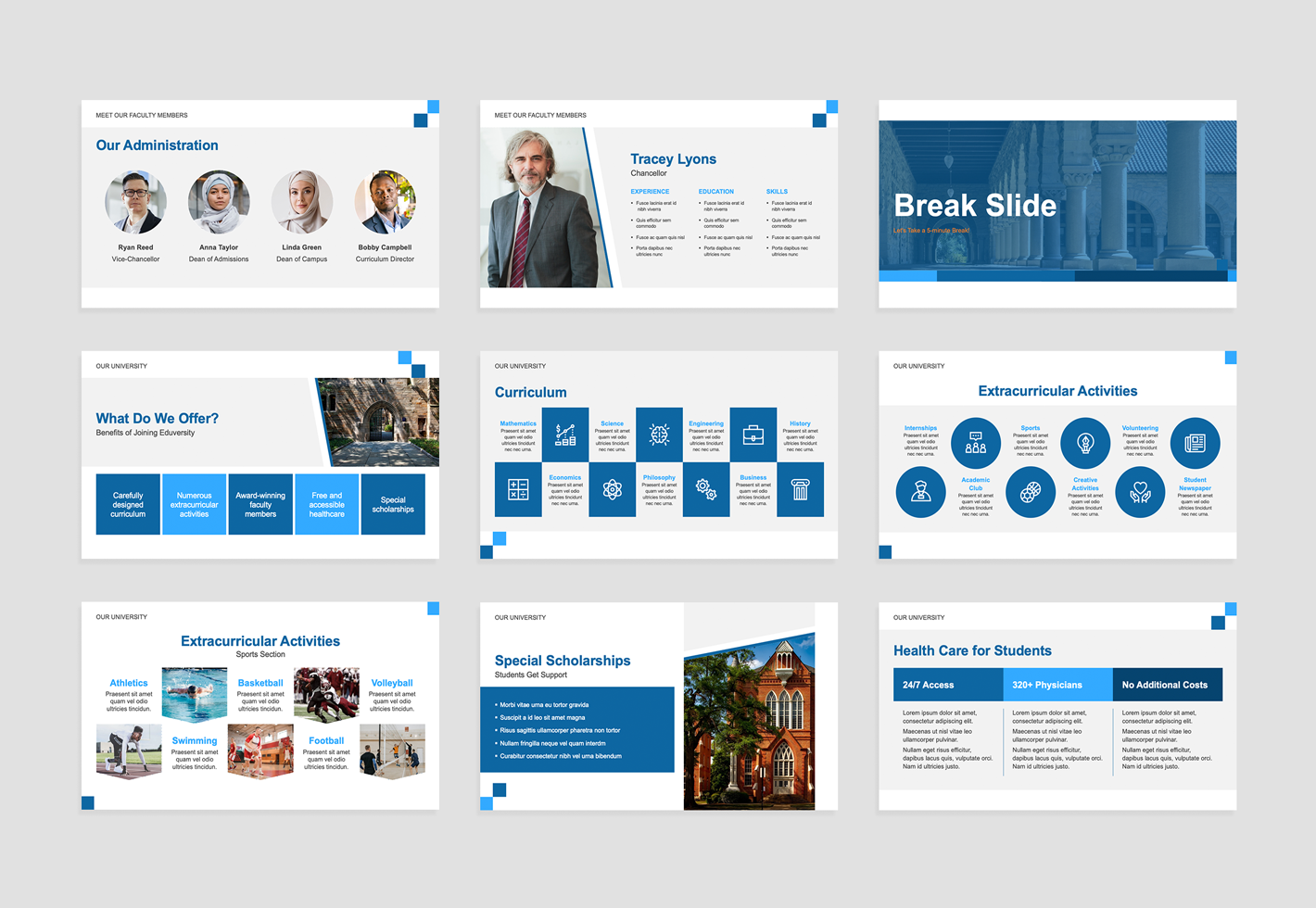
PowerPoint Presentation Design  have become a ubiquitous means of communication in today’s digital world. They are utilized across various fields, from business to education, as a powerful tool for conveying information and ideas. However, a well-crafted PowerPoint presentation design is what distinguishes an engaging, memorable, and effective presentation from a forgettable one. In this comprehensive guide, we will delve deep into the art of PowerPoint presentation design, emphasizing the importance of design principles, strategies, and best practices. For further assistance with your PowerPoint presentation design, visit  powerpointpresentationhelp.com.

PowerPoint Presentation Design


The Significance of PowerPoint Presentation Design

Let’s start by understanding why PowerPoint presentation design is so crucial. The design of your presentation greatly influences how your message is received. Here are some compelling reasons to focus on your presentation’s design:

  1. Visual Appeal: A well-designed presentation is visually appealing, capturing the audience’s attention and holding it throughout the presentation.
  2. Comprehension: Effective design aids in conveying complex information in a clear and understandable manner.
  3. Professionalism: A polished and well-designed presentation reflects professionalism and competence.
  4. Engagement: Engaging design elements keep the audience interested and help them remember the content.
  5. Retention: Proper design helps in retaining the information presented.
  6. Credibility: Good design instills trust and credibility in the content and the presenter.

Now that we’ve established the importance of PowerPoint presentation design, let’s explore how to master it.

PowerPoint Presentation Design

Elements of a Winning PowerPoint Presentation Design

  1. Layout and Structure:A well-structured layout is the foundation of your PowerPoint presentation. It should include:
    • A clear title and introductory slide.
    • Consistent fonts and font sizes.
    • A logical sequence of slides that follows a story or message.
    • Adequate spacing and alignment to reduce clutter.

    The structure should guide your audience through your presentation seamlessly.

  2. Color Scheme:Choosing the right color scheme is essential. The color palette should be:
    • Cohesive: Stick to a limited set of colors that complement each other.
    • Easy to read: Ensure text is legible against the background.
    • Reflective of your brand or topic: Colors should convey the message you want to send.

    Consistency in your color choices creates a visually appealing presentation.

  3. Typography:Selecting appropriate fonts for your presentation is crucial. Follow these guidelines:
    • Use sans-serif fonts for headings and serif fonts for body text.
    • Maintain a consistent font size throughout the presentation.
    • Avoid using too many different fonts to keep the design clean and professional.

    Typography should enhance readability and contribute to the overall visual appeal.

  4. Visual Elements:Incorporate visual elements to make your presentation engaging:
    • Use high-quality images and graphics.
    • Employ charts, graphs, and diagrams to simplify complex data.
    • Apply animation and transitions judiciously to add interest without distraction.

    Visual elements should complement the content and reinforce the message.

  5. Consistency:Consistency in design is key. Ensure that:
    • Slide layouts remain the same throughout.
    • Font choices and sizes are consistent.
    • Colors and graphic styles align with your theme.

    Consistency fosters a cohesive and professional appearance.

  6. Whitespace:Whitespace, or the space between elements, is vital. It:
    • Improves readability.
    • Provides breathing room for the audience.
    • Emphasizes important content.

    Properly utilized whitespace guides the audience’s attention and reduces visual clutter.

PowerPoint Presentation Design

Strategies for Effective PowerPoint Presentation Design

  1. Storytelling:Weave a narrative throughout your presentation. This keeps the audience engaged and helps them remember your message. A compelling story adds depth to your content.
  2. Simplicity:Less is often more. Avoid cluttered slides and long paragraphs. Simplify your message to its core components for better comprehension.
  3. Visual Hierarchy:Create a visual hierarchy with font sizes, colors, and placement. This guides the audience’s attention to the most important elements on each slide.
  4. Audience-Centric Design:Tailor your design to your specific audience. Consider their preferences, knowledge level, and expectations when designing your presentation.
  5. Practice and Rehearse:Practice your presentation multiple times to ensure that your design enhances your message and doesn’t distract from it.

Best Practices for PowerPoint Presentation Design

  1. Maintain Clarity: Use simple language and concise statements. Avoid jargon or complex terminology.
  2. Use Visuals Wisely: Visual elements should support your content, not overshadow it. Use images, charts, and graphs when they enhance understanding.
  3. Limit Bullet Points: Overuse of bullet points can be monotonous. Instead, use visuals or concise sentences.
  4. Transitions and Animation: Use transitions and animations sparingly. They can enhance engagement but should not detract from your message.
  5. Feedback and Iteration: Seek feedback from peers or colleagues and be open to making improvements.

PowerPoint Presentation Design


Conclusion

In today’s world of information overload, an exceptional PowerPoint presentation design is the key to effectively communicate your message and leave a lasting impression. A well-designed presentation not only captivates your audience but also enhances your credibility and professionalism. To further enhance your PowerPoint presentation design skills, consider seeking assistance from experts at PowerPointPresentationHelp.com.

Remember that effective design is not about dazzling your audience with fancy graphics but about conveying your message clearly and engagingly. By following the principles, strategies, and best practices outlined in this guide, you’ll be well on your way to creating PowerPoint presentations that stand out and deliver your message with impact.